Fastest Growing Bodyshop finalists announced!
To view this email online, follow this link |
|
|
|
|
Fastest Growing Bodyshop Awards - finalists announced for THREE bodyshop awards at the Night of Knights! |
|
|
|
HUGE congratulations to the finalists for three bodyshop awards to be presented at the ABP Night of Knights later this month: the Fastest Growing Bodyshop Group, Fastest Growing Single Site Bodyshop Business, and Fastest Growing Bodyshop Group Site Awards.
The winners we be announced at the ABP Club Night of Knights in Birmingham on Thursday 29 October. Book tickets ASAP by sending an email to events@abpclub.com. Here are the finalists...
The 5 finalists for Fastest Growing Bodyshop Group Award: - Accident Repair Hub Group (inc 5 of the AD Williams sites acquired)
- Express Bodyworks Group
- Nova Automotive Group
- Shorade ARC Group
- Touch Ups Group
The 5 finalists for Fastest Growing Single Site Bodyshop Business Award: - FGS (Fenham Garage Services) [Fenham Coachworks Ltd t/as]
- Jenkins & Pain [U C L Coachbuilders Ltd t/as]
- Patons ARC [John Paton & Son Ltd t/as]
- Peggs A.R.C Ltd
- Warley Car Clinic (Mid) Ltd
The 5 finalists for Fastest Growing Bodyshop Group Site Award: - Activate Group, Kings Langley
- L and I Eaton Group, Carluke
- Nova Automotive Group, Colchester
- Nova Automotive Group, Witham
- Veetec Group, Enfield
|
|
|
|
|
AutoBodies - North Somerset-based repairer launches off-grid mobile bodyshop |
|
|
|
|
The off-grid electrical architecture allows the van's equipment to operate without a conventional continuously running petrol or diesel generator, reducing the need for generator operation at customer sites.
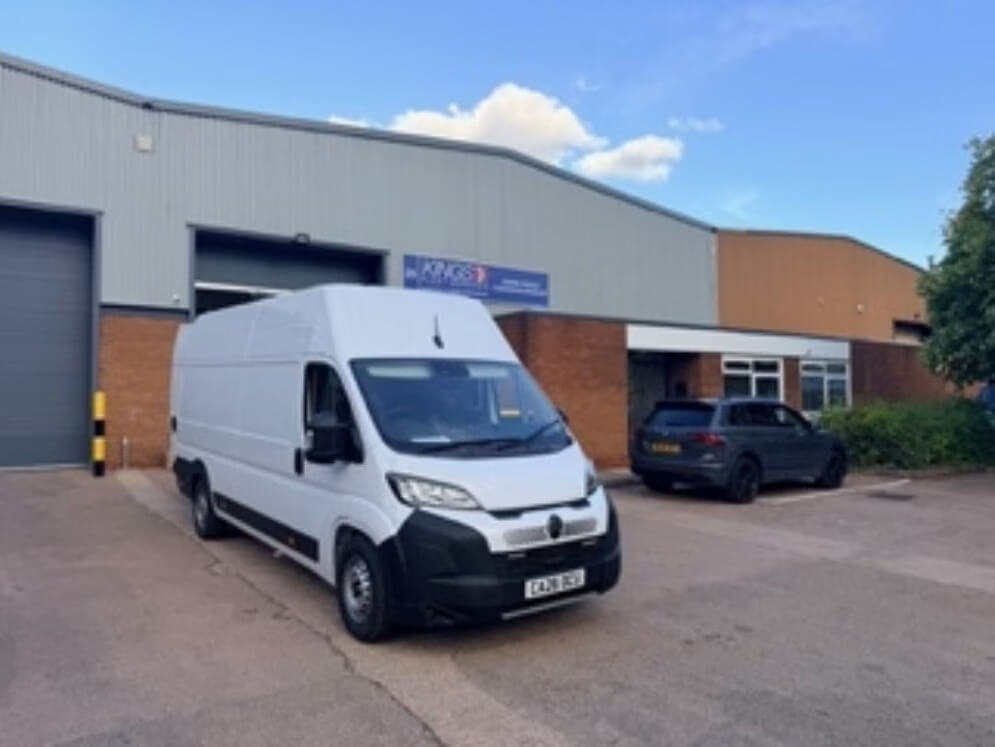
North Somerset-based AutoBodies is challenging the conventional approach to mobile SMART repairs with the launch of a purpose-built, fully self-sufficient mobile bodyshop. Combining traditional bodyshop expertise with advanced equipment, innovative engineering and a strong emphasis on sustainable repair methods, the business believes its new operation represents an important step forward for the sector.
For many established accident repair businesses, SMART repair has traditionally been viewed as a complementary service, often subcontracted to independent mobile operators. However, Clevedon-based AutoBodies believes the market is changing, and says "the next generation of mobile repair services will need to deliver something considerably more sophisticated".
Under the direction of Richard Robertson, Director at AutoBodies, the company has taken the decision to enter the mobile SMART repair market with an offering that combines the convenience of on-site repairs with the technical knowledge, quality control and accountability of an established accident repair centre.
But rather than simply purchasing an equipped van and entering an increasingly competitive market, the business has invested considerable time and resources into developing an entirely bespoke mobile repair platform. The distinction is an important one for Richard:
"There's no shortage of SMART repair operators in the market, and some do an excellent job. But we felt there was an opportunity to approach things differently," he explained. "We didn't want to create another mobile repair business that happens to have a bodyshop behind it. We wanted to take the experience, technical standards and repair philosophy of our bodyshop and make those available directly at the customer's premises.
"Ultimately, our customers should have confidence that the repair they receive on-site is supported by the same expertise and professional judgement they would expect when bringing their vehicle into our workshop." That relationship between the fixed-site bodyshop and mobile operation is central to AutoBodies' strategy.
While the mobile unit is equipped to undertake SMART bodywork, paint refinishing, alloy wheel refurbishment and diamond-cut wheel repairs, it also benefits from the backing of the company's wider repair infrastructure. This allows repairs to be assessed on their individual merits, with work that falls outside the appropriate scope of a mobile repair referred back to the bodyshop rather than attempting to make every repair fit the mobile model.
Robertson believes this approach offers an important distinction, particularly for dealerships, fleet operators and businesses that require consistent standards, reliable turnaround times and a single point of accountability. Turning the concept into reality required a specialist engineering partner, and AutoBodies worked closely with Kings Fleet Services to develop the bespoke vehicle.
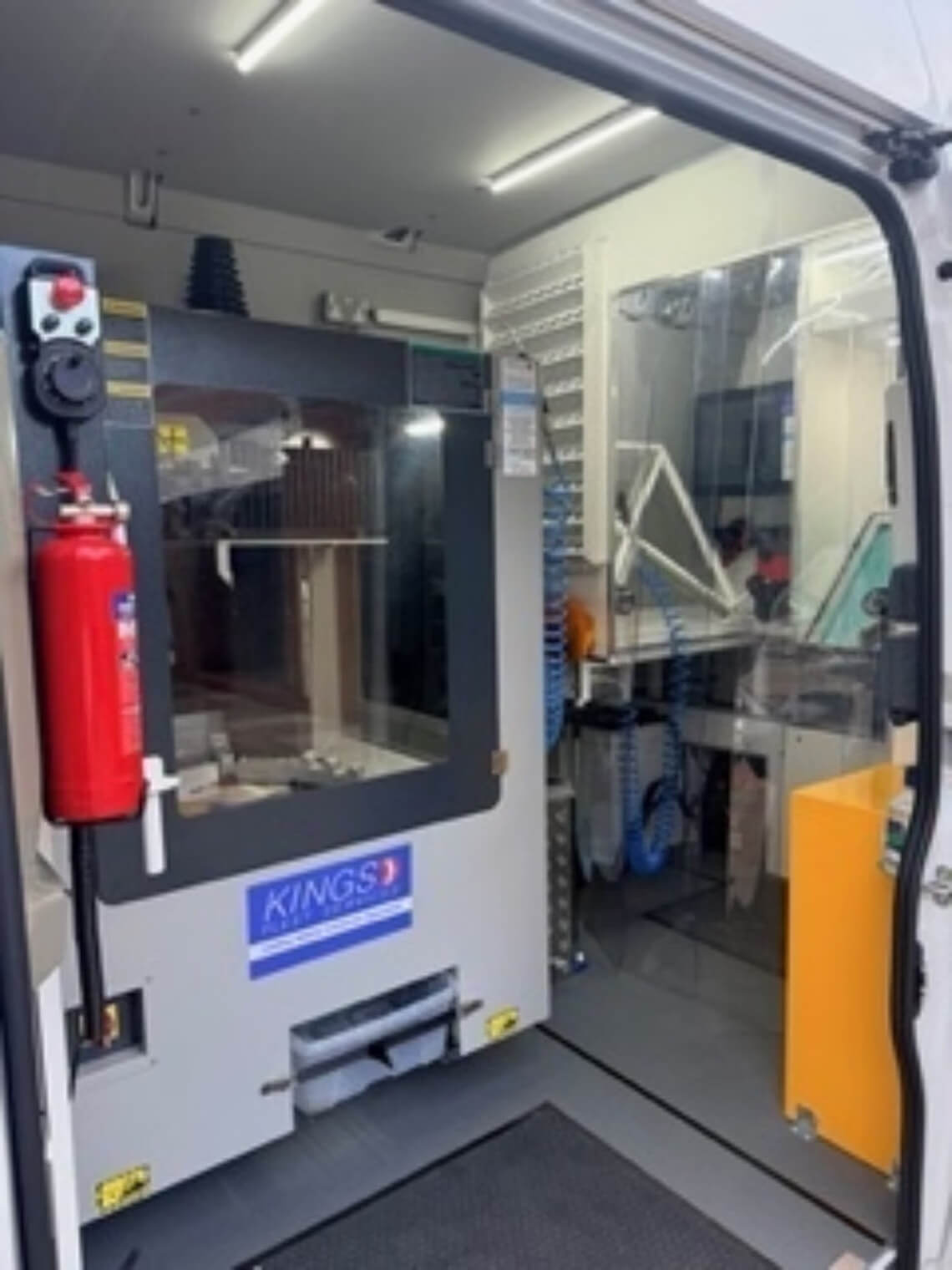
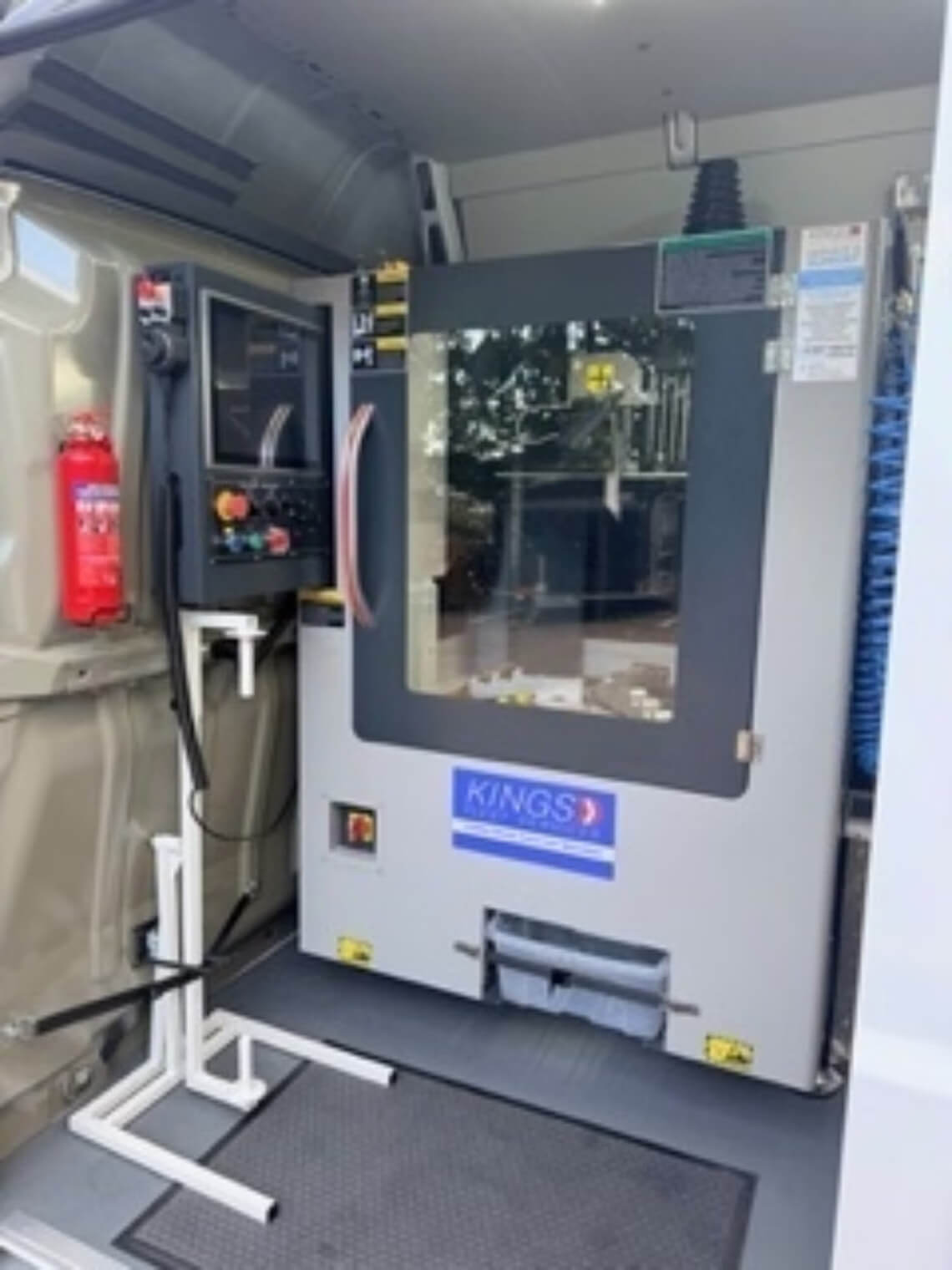
Based on a Citroën Relay platform, the conversion goes considerably further than the layout of a conventional SMART repair van, said Richard. The brief was ambitious: create a genuinely self-sufficient mobile workshop capable of operating without reliance on a customer's electricity supply, while accommodating the significant electrical, compressed-air and extraction requirements of professional refinishing and alloy wheel refurbishment equipment.
Working collaboratively, AutoBodies and Kings Fleet Services developed a carefully considered installation incorporating battery-based electrical power, compressed-air generation, air drying, filtration, specialist extraction and dedicated repair equipment.
The design also had to accommodate two technicians working efficiently, with particular attention given to workflow, equipment accessibility, storage and the practicalities of operating in dealership and fleet environments. "From the outset, we knew this couldn't be an ordinary conversion," he added.
"What we've achieved with Kings Fleet Services is something we're exceptionally proud of. There was an enormous amount of engineering involved, particularly around power distribution, air supply, equipment integration and making everything work together in a relatively confined space. "Kings understood what we were trying to achieve and worked with us to turn what was, frankly, a very demanding specification into a working vehicle.
"I genuinely believe the finished product is an engineering masterpiece. But the cleverest part isn't simply the technology. It's how everything has been designed around the technician and the repair process." That attention to detail has already demonstrated its value.
During the vehicle's initial operational shakedown, AutoBodies reports that the volume of work completed reached twice its original budgeted expectation, with the performance of the battery systems and the quality of the compressed-air supply proving particularly encouraging. For Richard, it provided early confirmation that the extensive development work had been worthwhile.
One of the most significant decisions in developing the vehicle was the choice of alloy wheel repair equipment. AutoBodies selected Precision Wheel Equipment to supply its specialist diamond-cutting lathe and thermal metal coating system.
The decision reflects a wider philosophy within the company: investing in technology that makes it possible to repair more components rather than automatically replacing them. The compact MICRO24 diamond-cutting lathe allows the mobile operation to carry out suitable diamond-cut alloy wheel refinishing on-site, removing the need for those wheels to be transported to a separate refurbishment facility.
Alongside it, the thermal metal coating system provides an additional repair capability for appropriate wheel surface damage, allowing material to be restored as part of a controlled refurbishment process rather than relying exclusively on further machining. For AutoBodies, the benefits extend beyond productivity and commercial convenience.
"One of the things I feel strongly about is the ethics of repair," Richard explained. "As an industry, we should be looking at how we can safely retain and restore components wherever it's technically appropriate, rather than simply replacing them.
"An alloy wheel is a perfect example. If a wheel can be professionally assessed and safely refurbished, why should replacement automatically be the preferred option? There's a manufacturing cost, a material cost and an environmental impact attached to producing and transporting a new wheel."
The combination of precision diamond cutting and thermal metal coating offers greater flexibility in selecting the most appropriate repair technique for eligible wheels, subject to manufacturer requirements, wheel condition and safety limitations. He is equally clear that these capabilities are not intended to justify repairs to structurally damaged or otherwise unsuitable wheels.
"It's not about repairing something that shouldn't be repaired. Quite the opposite. It's about having the right expertise and equipment to make an informed decision. "The ethical approach is to repair when it's safe and appropriate, and replace when it isn't. We believe that's how responsible repair businesses should operate."
Sustainability was another important consideration in the development of the mobile bodyshop. The off-grid electrical architecture allows the van's equipment to operate without a conventional continuously running petrol or diesel generator, reducing the need for generator operation at customer sites.
At the same time, the ability to deliver several different repair services during a single visit creates opportunities to reduce unnecessary vehicle movements, component transportation and workshop downtime.
For dealer groups and fleet operators, this combination of convenience and repair capability has the potential to deliver meaningful operational benefits. Vehicles can remain on-site while suitable damage is rectified, avoiding some of the logistical challenges associated with sending them away for cosmetic refurbishment.
Richard said he sees particular opportunity as vehicle retailers and fleet operators face increasing pressure to manage preparation costs, reduce vehicle downtime and demonstrate more responsible environmental practices: "Everyone talks about sustainability, but we wanted to make it part of the actual repair process rather than just something written into a policy.
"If we can restore a component safely, avoid an unnecessary replacement, reduce transportation and carry out the repair efficiently at the customer's premises, that's a positive outcome for everyone. "And importantly, it can make commercial sense too. Sustainability and profitability don't have to be opposing objectives."
Beyond the technical achievements, AutoBodies believes the development reflects a broader shift in expectations surrounding mobile SMART repair. As more sophisticated equipment is deployed outside the traditional bodyshop environment, Robertson believes the industry must give equal consideration to technician safety, operating procedures, repair quality and compliance.
The company's approach has therefore been to engineer these requirements into the vehicle and its working processes from the outset, rather than treating them as secondary considerations. "Mobile repair shouldn't mean compromising on standards," said Richard.
"The industry has spent years improving processes, training, safety and repair quality within fixed-site bodyshops. We should be applying that same thinking to mobile operations. "That was fundamental to our design. We wanted a vehicle that was properly engineered for the work we're asking our technicians to carry out, not simply one that could physically accommodate the equipment."
Although the mobile bodyshop is still in its early stages of operation, he is enthusiastic about both its initial performance and the wider commercial possibilities. Richard believes the investment offers AutoBodies an opportunity to build stronger relationships with dealerships, fleet operators and existing customers while introducing a service capable of operating beyond the conventional geographical limitations of a fixed-site repair centre.
The initial results have strengthened that confidence, although the business is taking a measured approach to evaluating operational performance and future expansion. "I'm incredibly positive about where this can go," he said.
"We've spent a huge amount of time thinking about what the market actually needs, how our technicians work and what we can do to offer something genuinely different. "The early results have exceeded our expectations, but what's most exciting is that we've barely begun to explore the full capability of the vehicle.
"I don't see this as us simply adding another service to AutoBodies. I see it as the beginning of an entirely new part of the business, with enormous potential." For Richard, the ambition is not simply to grow a mobile repair operation but to demonstrate how established bodyshop expertise, specialist engineering and a considered approach to repair sustainability can come together in a commercially viable service.
"If we're going to invest in something, we want to do it properly. That means being prepared to challenge conventional thinking and build something that genuinely improves the service we deliver. "We've made a significant commitment to this project because we believe in the future of SMART repair, particularly when it's supported by the standards and experience of a professional bodyshop.
"And if this is what we can achieve with our first vehicle, I'm very excited about what comes next." For AutoBodies, the journey into mobile SMART repair has only just begun. But its first purpose-built, off-grid mobile bodyshop offers an intriguing example of how the boundaries between traditional accident repair and mobile refurbishment could continue to evolve. |
 |  |
|
|
|
|
Martin Williams Hull - CV repair specialist purchases property to expand manufacturing capacity |
|
|
|
|
Hot on the heels of the acquisition of 𝗛𝗼𝗴𝗮𝗿𝘁𝗵 𝗖𝗼𝗮𝗰𝗵𝘄𝗼𝗿𝗸𝘀 - which includes 𝗡𝗼𝗿𝘁𝗵 𝗘𝗮𝘀𝘁 𝗠𝗼𝘁𝗼𝗿𝗵𝗼𝗺𝗲 𝗥𝗲𝗽𝗮𝗶𝗿 𝗖𝗲𝗻𝘁𝗿𝗲, located in 𝗕𝗶𝗿𝘁𝗹𝗲𝘆, 𝗖𝗼𝘂𝗻𝘁𝘆 𝗗𝘂𝗿𝗵𝗮𝗺, in September - Martin Williams Hull has purchased a new property to further expand it's manufacturing capacity.
Martin Williams Hull said: "We are incredibly proud to announce that we have recently purchased the 𝗠𝗶𝗹𝗹 𝗩𝗶𝗲𝘄 𝗽𝗿𝗼𝗽𝗲𝗿𝘁𝘆 𝗶𝗻 𝗕𝘂𝗿𝘀𝘁𝘄𝗶𝗰𝗸. This will add much needed additional capacity to our manufacturing footprint and allow us to expand our product range.
"The site will undergo a full refurbishment in the coming months and we look forward to sharing more updates with you soon. "We would like to thank Christopher Crystal and the team at Wilkin Chapman Rollits along with PPH Commercial for their assistance in completing this purchase." |
 |  |
|
|
|
|
TouchUps Body Shop - ACG - showcases the value of partnership with customer case study |
|
|
|
|
ACG has published its latest customer case study, showcasing how its funding partnership with TouchUps Body Shop, Glasgow, has helped improve cash flow, reduce administration and deliver significant cost savings.
Founded more than 22 years ago by William Findlay, TouchUps has grown from a one-car unit into a 54-strong, family-run bodyshop operating across two sites, with manufacturer approvals from Tesla, Volkswagen Audi Group and BYD. As the business grew, TouchUps found that its previous funding provider could no longer deliver the level of service and communication it needed. The business chose ACG for its personal approach, competitive costs and reputation for reliable customer support.
Since moving to ACG, TouchUps has seen improved cash flow, less administration and significant cost savings, alongside fast responses and improved service. Rachel Findlay, Business Owner at TouchUps Body Shop, said:
“Definitely the level of service, the personal approach and communication and feeling valued as a business… Cash flow is critical for our business, and we feel we've built a strong relationship, and it just feels like another member of our team.” ACG is grateful to TouchUps for sharing its experience and for its continued partnership.
“We’re incredibly pleased to have Rachel, William and the TouchUps team as part of the ACG family. We’ve built a fantastic relationship with them, and it’s been a real pleasure to support the business as it continues to grow.” Commented Head of Bodyshop Sales, Chris Potts.
“I’m particularly grateful to Rachel for taking the time to share their experience through this case study. Their feedback means a great deal to us and is a great reflection of the relationship we strive to build with every customer. Having customers like Rachel and William, who trust us to be part of their journey, is something we’re incredibly proud of.”
The case study also highlights the opportunity for bodyshops who may not be happy with their current funding provider. ACG offers a seamless transfer, improved rates and ongoing support, making it easier than ever to make the switch. If your current funding provider isn't delivering the service, value or support your business needs, speak to ACG about making the move.
The full TouchUps Body Shop case study is available on the ACG website. |  |
|
|
|
|
LKQ - promotes Chris Roe to Sales Director |
|
|
|
|
Chris has worked in the automotive aftermarket since 2011 and joined LKQ’s bodyshop division in 2014. Since then, he has progressed from Regional Sales Manager to Head of Key Accounts and, most recently, led the Strategic Accounts team.
LKQ UK and Ireland’s bodyshop division is continuing to bolster its leadership team with the internal appointment of Chris Roe as Sales Director, supporting LKQ’s commitment to developing its people from within, while strengthening the experience and expertise available to customers as the vehicle refinish and accident repair industry continues to evolve.
Chris, who has worked in the automotive aftermarket since 2011 and joined LKQ’s bodyshop division in 2014, has progressed from Regional Sales Manager to Head of Key Accounts and, most recently, led the Strategic Accounts team. In his new role as Sales Director he will lead teams focused on engaging, supporting and partnering with customers across the vehicle refinish industry. Chris said:
“We have fantastic people in LKQ. Many colleagues from the distribution businesses acquired by LKQ have developed in new or bigger roles over the last 12 years, as we have continued to positively invest in recruitment, training and apprenticeships.
“I’m delighted to lead teams that engage, support and partner with customers across the diverse industry that is vehicle refinish. There are many challenges facing this industry and together with our colleagues across the wider LKQ businesses, I am confident we can support the fastest period of transformation in accident repair.” Chris O’Rourke, Managing Director, LKQ Specialist Business, said:
“Chris’s appointment demonstrates the strength of talent we have within LKQ and, importantly, our ability to provide opportunities for our people to develop and progress their careers within the business. I’m looking forward to working with Chris as we continue to build on the momentum and growth we have achieved across our bodyshop division.” |
|
|
|
|
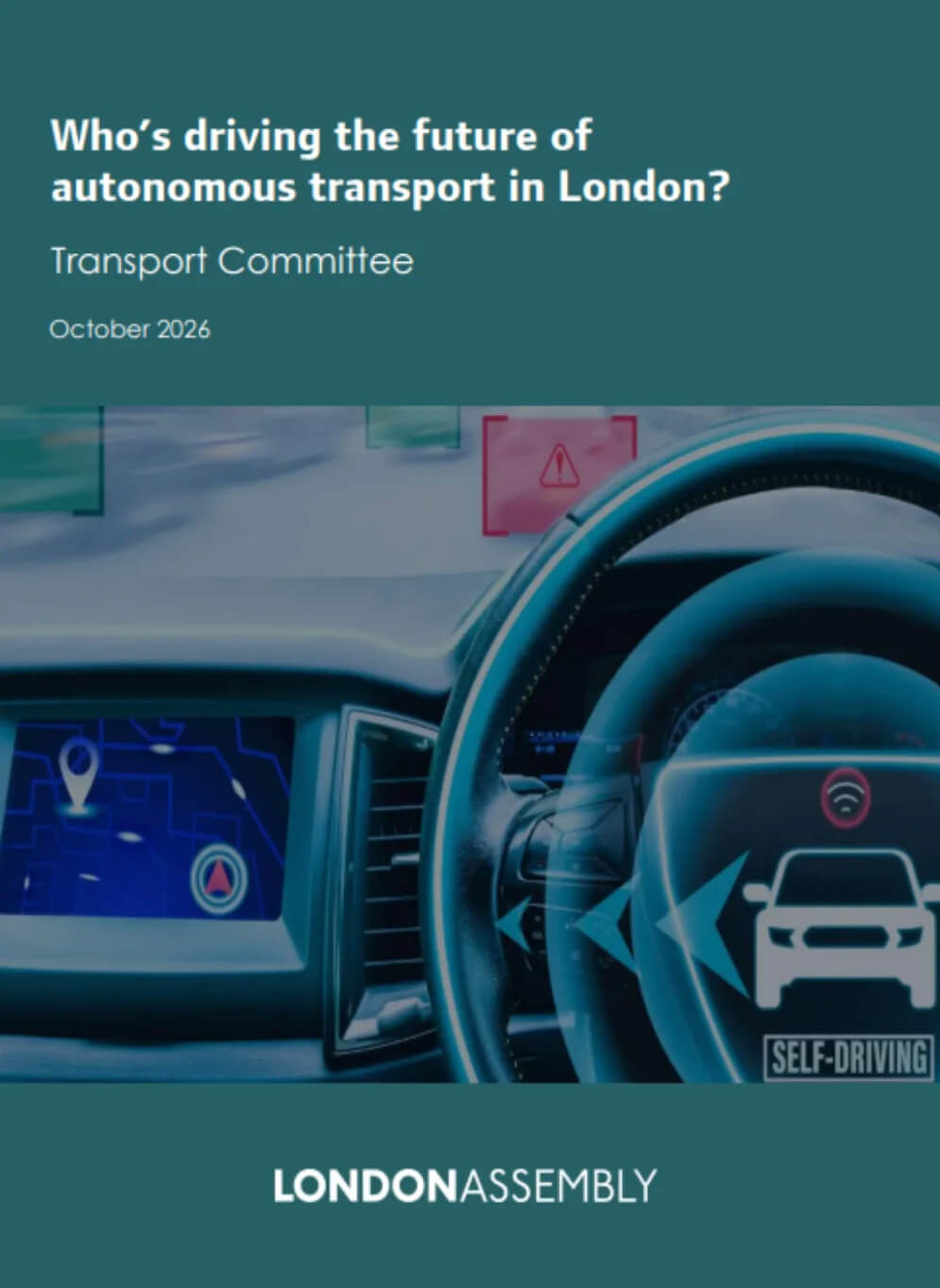
DfT v TfL - London Assembly Transport Committee "not convinced that London should welcome autonomous passenger services" |
|
|
|
|
“The London Assembly Transport Committee is not convinced that London should welcome autonomous passenger services."
The Government should give Transport for London (TfL) the power to set a cap on the number of autonomous passenger vehicles operators can deploy in London, when the full regulations under the Automated Vehicles Act are put in place in 2027. This should happen alongside devolving the power to issue Automated Passenger Services (APS) permits to TfL.
In its newly published report, the London Assembly Transport Committee believes that as it stands, it has not currently heard sufficient evidence to persuade it that London should welcome autonomous passenger services. Recommendations in the report ‘Who’s driving the future of autonomous transport in London?’ include:
The current Automated Passenger Service (APS) permitting framework should be regarded as transitional, during the initial small-scale pilot phase. When the Government puts in place the full regulations under the Automated Vehicles Act in 2027, it should devolve the power to issue and withdraw APS permits, and to set conditions for operators wishing to deploy autonomous passenger vehicles in London, to Transport for London (TfL).
- TfL, in partnership with the Metropolitan Police Service (MPS), the London Ambulance Service NHS Trust and the London Fire Brigade (LFB), should establish a standard framework for interaction between autonomous passenger vehicles and emergency services.
- TfL should establish a definition for safety incidents involving Autonomous Passenger Vehicles. This should include as a minimum, crashes and near misses. As a condition for granting consent, TfL should require that this information is provided along with the vehicle’s decision-making processes that led to the incident within 24 hours.
- TfL should establish ‘empty miles driven’ as a core reporting metric, as a condition for granting consent to Automated Passenger Service (APS) permits. TfL should continuously monitor and publish this data, alongside data on traffic levels and congestion. Negative impacts on congestion should be a reason for withdrawal of consent if TfL is granted full regulatory powers.
Chair of the London Assembly Transport Committee, Caroline Russell AM, said:
“The London Assembly Transport Committee is not convinced that London should welcome autonomous passenger services.
“It is vital that TfL gets the power to issue Automated Passenger Service (APS) permits, given these services are so imminently expected on London’s roads. But autonomous passenger services are not the only option for driverless vehicle technology. Rather than just accepting the autonomous passenger service model proposed by operators, London should be looking at the transport problems it is trying to solve and then considering what solutions this technology could provide. We’d like to see more innovative thinking from TfL about the application of driverless technology in London, as currently, they are simply not in the driving seat.
“The impact of the introduction of automation on London’s roads is as yet unknown. TfL must ensure that if and/or how this technology is brought in, it is done in a way that works for Londoners and for our transport network.”
The Transport Committee examines all aspects of the capital’s transport system, to press for improvements for Londoners. The Committee pays particular attention to how the Mayor’s Transport Strategy is being implemented and looks closely at the work of Transport for London and other transport operators. |
|
|
|
|
AXA XL - partners with Gecko Risk to strengthen EV risk expertise |
|
|
|
|
AXA XL’s UK & Lloyd’s business unit has announced a strategic partnership with Gecko Risk, an electric vehicle (EV) and new energy vehicle data platform, to deepen its understanding of the evolving risks associated with commercial EV fleets.
Through the partnership, AXA XL’s risk consultants and underwriters will gain access to data-driven insights into EV risk profiles, helping them provide more informed support to clients and brokers as EV adoption accelerates. Poonam Jivram, Head of Motor Underwriting at AXA XL, UK & Lloyd’s, said:
“EV car sales topped 20 million globally in 2025 and are expected to exceed 23 million in 2026, according to the International Energy Agency’s Global EV Outlook 2026. The growing number of EVs in commercial fleets means fleet operators are facing a risk landscape that is not only different, but also continuously changing.
"The UK government's Zero Emission Vehicle mandate is expected to accelerate the adoption of electric vehicles across fleets. To ensure we continue to offer market-leading products, services and insight, we're partnering with Gecko Risk, enabling us to support clients with decisions around fleet selection, claims costs and new risk exposures. This proactive approach enhances our capabilities and broadens our offering for brokers and clients navigating these emerging exposures."
James Fisher, Chief Executive Officer at Gecko Risk, said: “We are delighted to be partnering with AXA XL. AXA XL’s expertise and approach to risk align closely with our own ambition to use data to help insurers make better, more informed decisions. We look forward to working together and delivering value through this partnership.”
Gecko Risk supports insurers and other industry stakeholders in assessing EV-related risks through advanced data analysis. Its dashboards offer visibility into areas including claims frequency and severity, vehicle make and model trends, and patterns of EV exposure, helping insurers improve underwriting decisions and risk management strategies. |
|
|
|
|
Dunlop - Tyre Safety Month highlights the risks of wet weather driving |
|
|
|
|
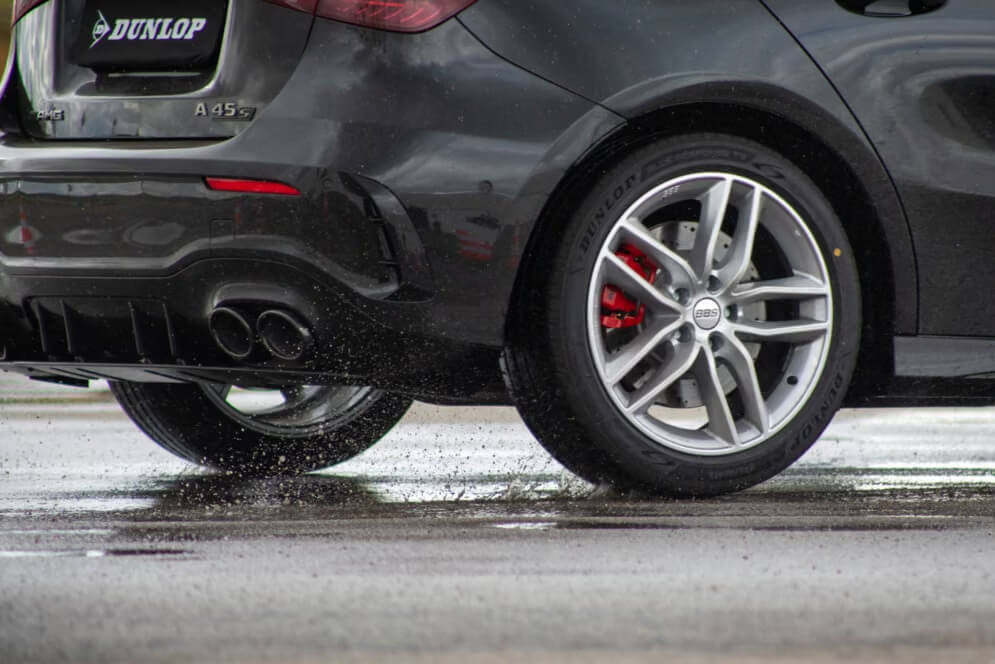
DUNLOP is encouraging enthusiast drivers in the UK to rethink how they approach driving this Tyre Safety Month as UK winters become milder and wetter. Drawing on findings from TyreSafe’s 2026 Tyre Safety Month campaign and recent Met Office climate data, DUNLOP highlights that wet roads are increasingly becoming a normal part of driving life in the UK. And for keen drivers, this means developing and practising their driving skills accordingly.
DUNLOP and its sister brand FALKEN are partnered with TyreSafe, a UK charity dedicated to raising awareness of tyre safety and the risks of poor tyre maintenance. The latest research from TyreSafe has found that 83 per cent of road users believe they are in full control of their stopping distances. Yet only six per cent could identify wet weather stopping distances at motorway speeds. Furthermore, 94 per cent of road users underestimate the stopping distance risk in wet conditions.
The UK’s changing climate: winter driving conditions are getting wetter
The latest climate data from the Met Office also spells out why this matters for the long-term. The ‘State of the UK Climate 2025’ report, published in July this year by the Met Office, says UK winters are getting milder and wetter.
From 2016 to 2025, the UK winter ‘half-year’ (from 1 October to 31 March) has been 13 per cent wetter compared with the period from 1961 to 1990, and three per cent wetter than the 1991-2020 baseline. What’s more, occurrences of exceptionally wet winter months have approximately doubled over the last decade compared with the historic average. Practice makes perfect: skills for driving more confidently in the wet
DUNLOP has outlined four skills for drivers to practice for greater confidence at the wheel when driving in the wet: - Aim for smoother inputs
Smoothness becomes more important when grip levels fall. Drivers should aim to practice smooth steering, braking and acceleration, with less abrupt movements, to allow the tyres to work more progressively. - Look further ahead
Good drivers look further ahead and plan earlier, extending their gaze along their desired path rather than right in front of the bonnet. This helps drivers to anticipate earlier, with greater visibility of potential hazards, other vehicles, corners, elevation changes and even changing road surfaces. Leaving a bigger gap between your car and the vehicle in front gives a driver greater scope to see further ahead. In wet weather, building up a minimum four-second gap behind the vehicle in front is good for visibility and safety. And looking further ahead can help drivers in other ways: getting in the right gear for an incline (up or down), maintaining momentum on a favourite road and – longer term – reducing brake and tyre wear. - Read the road surface
Understanding the road surface can make driving more rewarding, and skilled drivers aren’t just on the lookout for potholes. They can keep an eye out for shiny surfaces where there may be reduced traction, drainage channels and worn wheel tracks where aquaplaning could occur, or patches of mud or fallen leaves which can reduce grip. This can even extend to picking out painted lines on the road, which can be particularly slippery when wet. - Match tyres to the conditions
Tyres are a car’s only contact points with the road and are key to driving enjoyment and safety in wet conditions. Good tyre maintenance and an appropriate tyre choice are therefore critical factors for maintaining confidence and consistency through the winter.
- Age matters, not just tread depth
Tyres age even when they are barely used, so check the DOT date code regularly. Cars that sit for long periods or are exposed to weather and strong sunlight may need new tyres after about 6 years. As a general rule, replace tyres after 10 years at the latest, whatever the tread depth. For a start, drivers should check their tyres aren’t damaged and that they have sufficient tread depth, as well as ensuring they are inflated to their recommended pressures.
The legal minimum tread depth is 1.6 mm, but TyreSafe recommends that drivers be more vigilant and prepare for replacing tyres at the right time, and perhaps with all-season tyres: all the better for tackling the UK’s wet and unpredictable winter driving conditions with confidence. Thomas Deinhardt, senior technical and service engineer at Dunlop Tyre Europe, said:
“For drivers in the UK, perhaps the most overlooked driving skill today isn't the ability to drive quickly. Instead, it may well be learning how to drive confidently in the rain. It’s important for any driver to remain safe when driving in the wet, and many drivers see rain as something that can limit their enjoyment behind the wheel. We would argue the opposite.
“Driving is a skill people can spend their whole life mastering. And learning how to drive smoothly and safely in wet conditions can help make people better drivers all year round. With data showing UK winters becoming increasingly damp, wet-weather driving is a skill that car enthusiasts can – and should – actively develop.” Stuart Lovatt, chair of TyreSafe, said:
“Driving in wet weather presents challenges for even the most experienced road users, and our research shows that many have a misplaced confidence in their ability to judge stopping distances in these conditions. As the UK experiences increasingly wet winters, understanding how to adapt our driving to the conditions has never been more important.
“Developing good driving habits, such as leaving a greater stopping distance, anticipating hazards and accelerating and braking smoothly, can make a real difference to safety. Equally, ensuring tyres are properly maintained and have sufficient tread depth is essential to maintaining grip in wet conditions. Tyre Safety Month is an important opportunity to remind all road users that being prepared for wet weather starts with both their driving behaviour and their tyres.” |
|
|
|
|
eBay - DIY maintenance and sustainable driving habits could improve fuel efficiency for more than 70% of drivers |
|
|
|
|
eBay has revealed more than two-thirds (71%) of UK drivers could save on fuel costs through simple at-home maintenance or small changes to their driving habits. The findings come as almost nine in 10 (87%) UK motorists said their fuel costs have increased over the first half of the year, with the average monthly fuel bill having gone up by £40.31 compared to the start of 2026.
As fuel costs continue to put pressure on household budgets, eBay’s research shows many drivers are looking at lifestyle changes to reduce their bills. More than half (58%) said they would drive less often if fuel costs continued to rise, while almost a third (29%) would use public transport more and almost a fifth (19%) would consider switching to an electric vehicle. A minority (5%), would even consider selling their car, should the fuel cost situation worsen.
Despite this, many drivers may be overlooking affordable products and simple maintenance that can support fuel efficiency. For example, 63% of motorists recognise that regular servicing could improve fuel economy, but almost four in 10 (39%) have not done so at the required intervals. Similarly, 44% of UK drivers recognise the benefit of inflating tyres to the highest possible safe pressure, however, only 32% have actually done so.
This trend of awareness over action persists to fuel-related products as 39% believe purchasing more fuel-efficient tyres could help, yet just 15% have done so. eBay’s research also found common driving habits that can negatively impact fuel efficiency, with the leading culprit being driving with windows down or open (44%), followed by driving off straight away after switching the car on (35%), and using air conditioning when not necessary (14%).
eBay offers motorists access to the parts and accessories they need to support fuel-efficient driving and regular maintenance. From servicing kits and Castrol engine oils, to tyre inflators, fuel additives, fuel-efficient tyres from Black Circles’ own store, and car cleaning products from Autoglym’s branded store, drivers can find everything in one place.
Abir Tewari, UK Director of Commercial Operations, Parts & Accessories at eBay, said: “Fuel costs remain a real concern for motorists, but there are practical steps drivers can take to help their vehicles run more efficiently. Some of these are simple changes to driving habits, with many down to basic maintenance, such as checking tyre pressures, keeping servicing up to date, and purchasing the correct oils, filters, tyres and fuel system products.” |
|
|
|
|
Euro NCAP - publishes latest test results for Audi Q7, Kia EV2 and XPENG X9 |
|
|
|
|
Euro NCAP has long believed that the use of physical buttons or controls for basic functions is safer. The latest round of vehicle safety tests confirms that some manufacturers are responding to the call that in an increasingly complex age, keeping things simple is the safest approach.
Three new cars have been assessed by safety experts under Euro NCAP’s 2026 protocols that include the Audi Q7, Kia EV2 and XPENG X9. The results of Euro NCAP’s testing show that car manufacturers are making a steady return in favour of buttons and switches for basic functions, rather than the use of touchscreens and voice control.
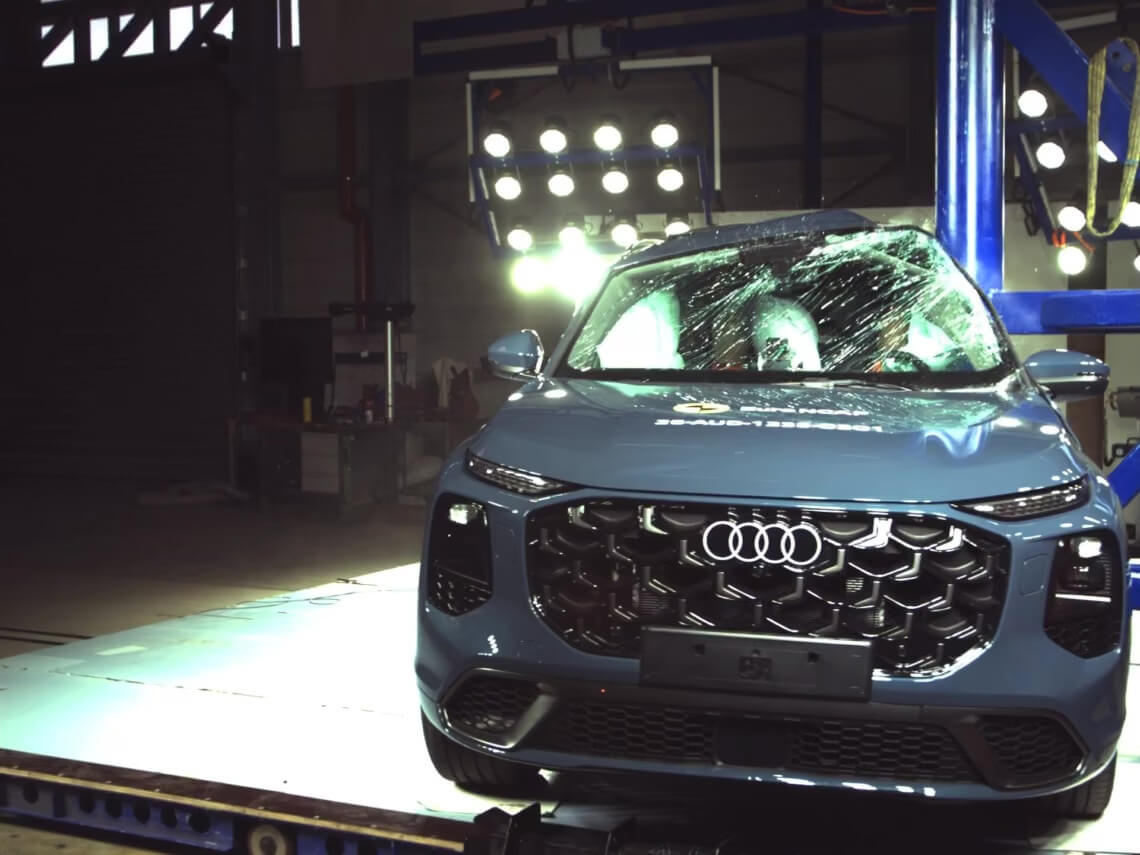
This point is illustrated by the differing performances of the latest generation Audi Q7, the Kia EV2 and the new XPENG X9. Both the Q7 and the X9 are large, premium cars aimed at families, but the Q7 SUV shows how to make driving controls simple, intuitive and ultimately safe, whereas the X9 relies too heavily on touchscreen technology.
Under the Safe Driving section of Euro NCAP’s safety rating, the key driving controls – indicators, windscreen wipers and washer, hazard warning lights, horn and eCall emergency button – should be operated by a direct physical input rather than hidden within a menu on a touchscreen.
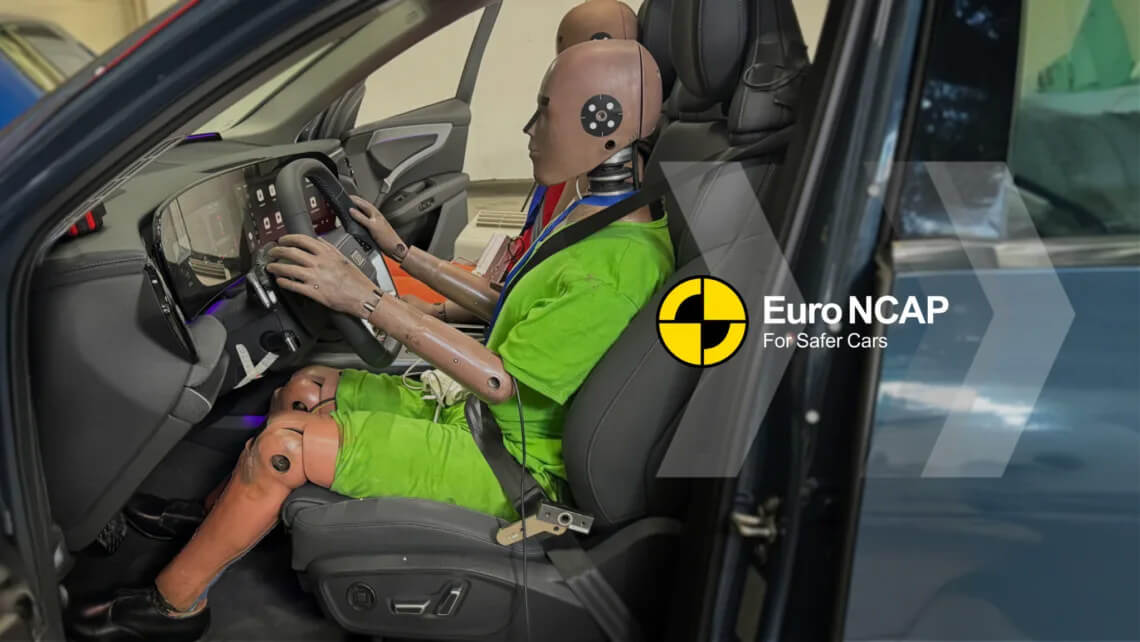
Audi, part of the Volkswagen Group, which has previously been criticised for doing away with buttons and switches, scores a high 90% overall for driving controls: 100% for the essential driving tasks and 80% for comfort and infotainment. Its new Q7 uses buttons and stalks that are clearly visible and ergonomically sited, are easily operated manually and reduce the chances of driver distraction. The Kia EV2, a smaller SUV also achieves excellent scores for its driving controls. In contrast, the Chinese car maker XPENG relies too heavily on the central touchscreen, which can be distracting, scoring only 20% for its primary driving controls.
Of the cars already tested by Euro NCAP in 2026, there are clear differences between European manufacturers and Chinese carmakers (with one exception the GEELY E2) with the Europeans scoring highly in the use of buttons for basic functions in the driving control assessment. The BMW iX3 scores 100% in driving controls with the CUPRA Raval and the GEELY E2 both scoring 80%. In contrast the ZEEKR 7GT and AION UT only score 20% with the Leapmotor B05 lagging with a score of 0%.
This seemingly small but significant difference highlights how Euro NCAP’s latest testing protocols, introduced for 2026, encourage the use of well-sited, easily operated physical buttons and switches for basic functions. This is partly in response to consumer criticism of too many day-to-day driving controls being embedded within touchscreen menus, which can be needlessly fiddly, and which research has shown has a higher distraction potential for a driver compared to physical buttons.
Audi Q7 – 5 stars
Taking cues from consumer feedback and Euro NCAP, Audi has taken the initiative to reinstate physical buttons and switches, a decision validated by a five-star Safety Rating. Under the Safe Driving evaluation, the Q7 also proved its forward-looking safety credentials with a lane departure system that varies its sensitivity depending on how attentive the driver is, reducing the warnings and interventions if the driver is alert and not distracted. Combined with excellent occupant protection across frontal, side, and pole impacts, the Q7 impresses.
XPENG X9 – 5 stars
The XPENG X9, a large MPV, relies heavily on its central touchscreen for core functions, leading to possible driver distraction and low scores in driving controls. However, it manages to secure a five-star overall rating off the back of a strong performance in Crash Avoidance and excellent Post Crash Safety. Where the X9 falters is in its speed assistance system, which failed to meet Euro NCAP's effectiveness benchmarks during the 2000 km real-world European test drive. The system struggled with conditional speed limits – such as wet weather restrictions or HGV-specific limits – and failed to meet basic protocol requirements to display the last known speed limit alongside a clear indication when an uninterpretable sign was encountered.
Kia EV2 – 5 stars
The Kia EV2, a crossover SUV, illustrates how crucial advanced driver monitoring has become, achieving a five-star rating thanks in part its Driver State Monitoring system and, like the Audi, varying its warning strategy depending on driver alertness. Under Euro NCAP’s testing, driver assistance features like lane departure prevention are evaluated to ensure they work in tandem with the driver’s attention levels – adjusting intervention timing and severity based on whether the driver is focused or distracted. To score well and avoid driver annoyance, systems must demonstrate a meaningful, calibrated difference in response between an attentive driver and a distracted one. A robust Crash Protection rating further helped secure the EV2 a five-star rating.
Dr. Aled Williams, Programme Director Euro NCAP, said: "Euro NCAP is continually monitoring market trends, and the move toward placing as many driving controls within a car’s touchscreen system is one that has concerned us just as much as it has annoyed consumers. It is clear in these results that the XPENG adheres to the mantra that everything must be included in the touch screen, despite overwhelmingly negative feedback by European car buyers. We applaud Audi and Kia for taking a more common-sense approach.
"Our latest protocols reward the intelligent use of physical buttons and controls, as this can reduce driver distraction, and both Audi’s new Q7 and Kia’s EV2 do an excellent job of keeping safety simple. Other manufacturers, including XPENG, would do well to follow this strategy." Also tested:
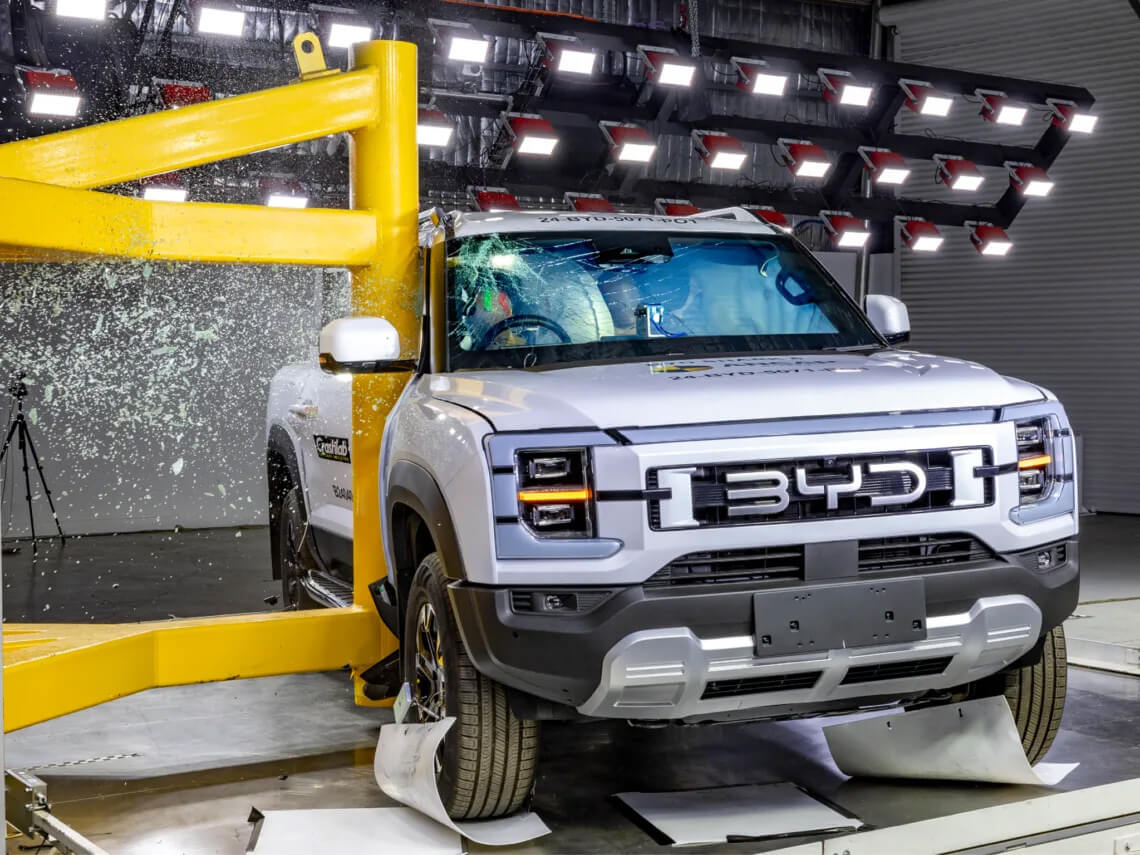
BYD SHARK – 5 stars (2025 rating) The BYD SHARK pickup truck achieved its five-star result with a rating adapted from Australasian NCAP 2025 testing, supplemented by Euro NCAP's own frontal offset and barrier impact evaluations. Despite a post-test penalty applied when a side curtain airbag failed to deploy correctly, the SHARK delivered good driver assistance to help prevent accidents, and solid crash protection performance in the event of an impact.
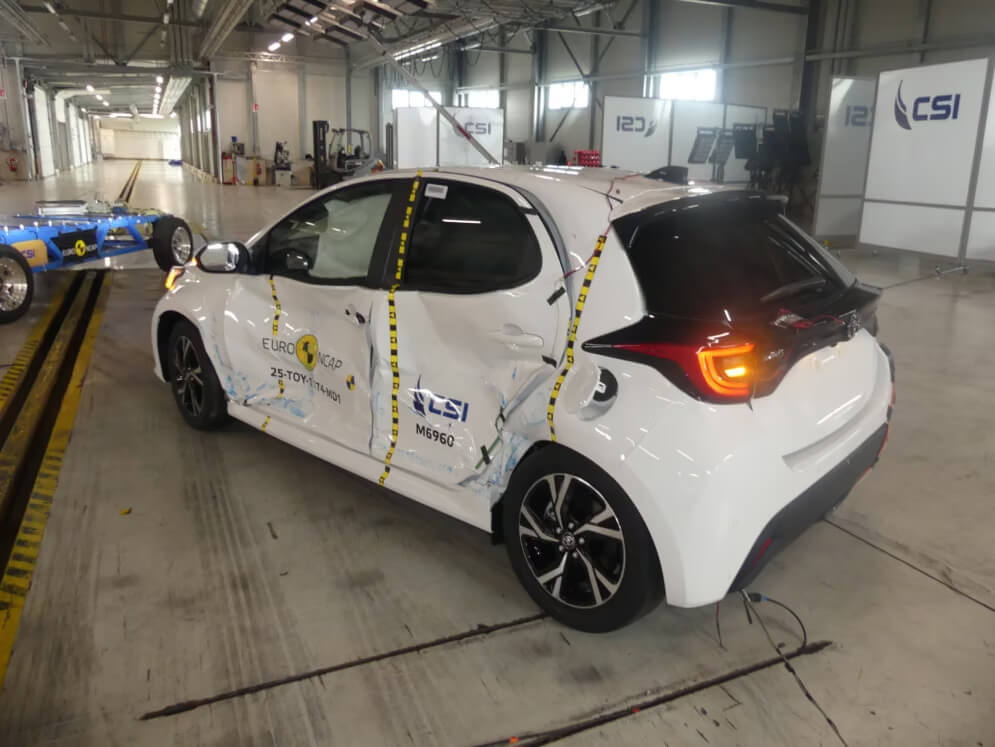
MAZDA 2 Hybrid – 4 stars (2025 rating) Finally, the MAZDA 2 Hybrid completes the lineup, maintaining a four-star rating carried over from its Toyota Yaris sister model.
|
 |  |
 |
|
|
|
|
FCA - motor finance legal challenge to be heard in February 2027 |
|
|
|
Motor finance legal challenge to be heard in February 2027. The Upper Tribunal has confirmed it will hear the legal challenges to the FCA's motor finance compensation scheme between 16 to 26 February 2027.
The scheme was challenged by three lenders - Volkswagen Financial Services, Mercedes Benz Financial Services, and Crédit Agricole Auto Finance – and by Consumer Voice, represented by Courmacs Legal.
The scheme is currently partially suspended. However, firms must keep preparing for the scheme and progress complaints as far as possible. The FCA said: Our scheme is the quickest, fairest and most efficient way to compensate consumers and we will defend it robustly.
Advice for lenders Lenders must comply with the scheme rules that remain in force. This includes sending letters to some consumers not owed compensation under the scheme.
Firms should plan for the possibility that, if the scheme or parts of it are quashed, there may be no motor finance compensation scheme and no complaint handling pause. In that scenario, lenders would need to be operationally and financially ready to resolve complaints through the usual complaint-handling process and within the usual statutory timescales. We expect lenders to plan rigorously for this scenario, make the necessary financial provisions and engage with their auditors.
We encourage firms to contact us if they have questions. We will keep our firm webpage updated with the latest information. Advice for consumers
The challenge is due to be heard between 16 to 26 February 2027, with a judgment expected in the following months. Until the legal process concludes, lenders do not need to calculate or pay compensation under the scheme. If you have complained, your lender may tell you if you are not owed compensation. However, some consumers may not be told until the legal process concludes, so not receiving a letter does not necessarily mean you are owed compensation.
If you are concerned about your car finance agreement and have not yet complained, you can complain directly to your lender for free. Our claims page explains how and provides lenders’ contact details. You do not need to use a law firm or claims management company (CMC), which may charge up to 36% of any compensation. Don’t sign up with more than one CMC or law firm as you may be charged multiple fees.
If you want to cancel an agreement with a CMC or law firm, you may be asked to pay a fee. That fee must be reasonable and reflect the work done. Most car finance claims are still at an early stage, so check any fee demand carefully. We and other regulators have seen poor practice from some CMCs and law firms. If you are concerned about how they have handled your claim, you should complain directly to the firm. We have created a template letter (DOC) to help. |
|
|
|
|
GSF - team GSF Clean Racing rounds off season at Brands Hatch with championship success |
|
|
|
|
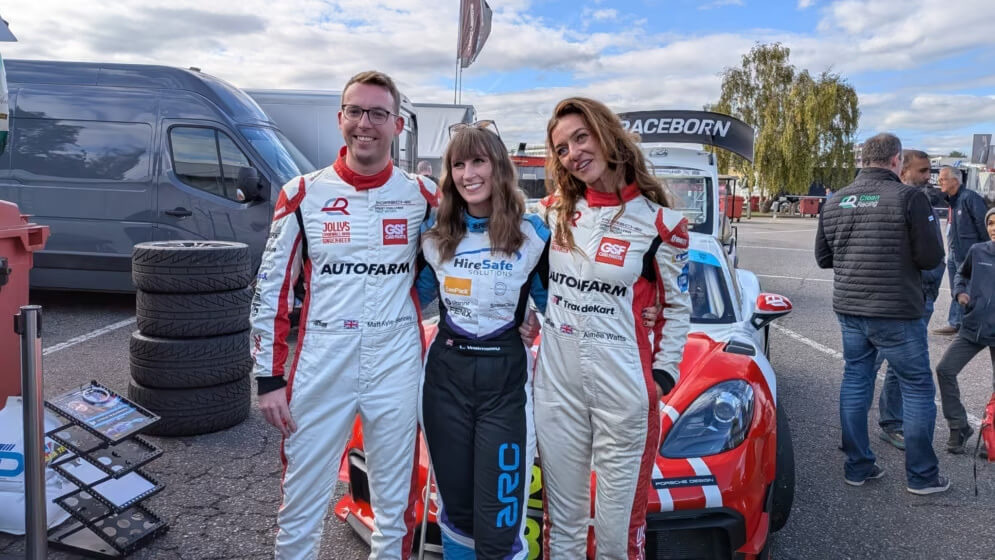
IMAGE: (L-R) Matt Kyle Henney, Lydia Walmsley, Aimee Watts, Clean Racing GSF Clean Racing has completed the 2026 Porsche Sprint Challenge GB season at Brands Hatch, with the final round welcoming more than 80 VIP GSF customers to the Kent circuit.
The sixth and final event of the season brought the team's 18-race campaign to a close, with strong performances both on and off the track. GSF played a key role throughout the season as a principal partner, with its branding showcased prominently on the team's striking livery. Alongside the racing, GSF has offered customers a full hospitality experience at every round this season.
John Lewis from Woodbourne Garage in East Sussex said:
"It's been an incredible event, brilliant from start to finish. Thanks to GSF for the invitation. Working with them makes a real difference to us thanks to their fast deliveries and attention to detail. As a team, we genuinely value the relationship we have with GSF. The Brighton team always has a solution and acts as a true partner in everything we do."
Final championship standings
After a full season, GSF Clean Racing delivered a strong team performance, with Matt Kyle-Henney securing an impressive third-place finish in the RS-Pro category and Max Watt ending the campaign in 10th. In the RS-Am category, Aimée Watts produced a consistent season to finish fifth overall. Combined, their efforts helped GSF Clean Racing secure third place in the prestigious teams' standings.
Peter Kyle-Henney, Owner of Clean Racing, reflected on the year:
“It's been a really strong season for us, and seeing Matt secure third and Aimee fifth in the championship was the perfect way to round it off. The entire team has done themselves proud regardless of the ups and downs typical of competing in a championship at this level.
“We wouldn’t be here without our partners and sponsors, so a huge thank you to GSF for the support over this year. It's been fantastic to welcome so many enthusiastic GSF customers and colleagues into the garage and hospitality.”
Steve Horne, Chief Executive Officer at GSF Car Parts, said:
"Our partnership with Clean Racing delivers fantastic experiences for customers while showcasing the values that define GSF. Congratulations to Matt, Aimée, Max and the entire team on an excellent season and a well-earned third-place finish in the team standings." | 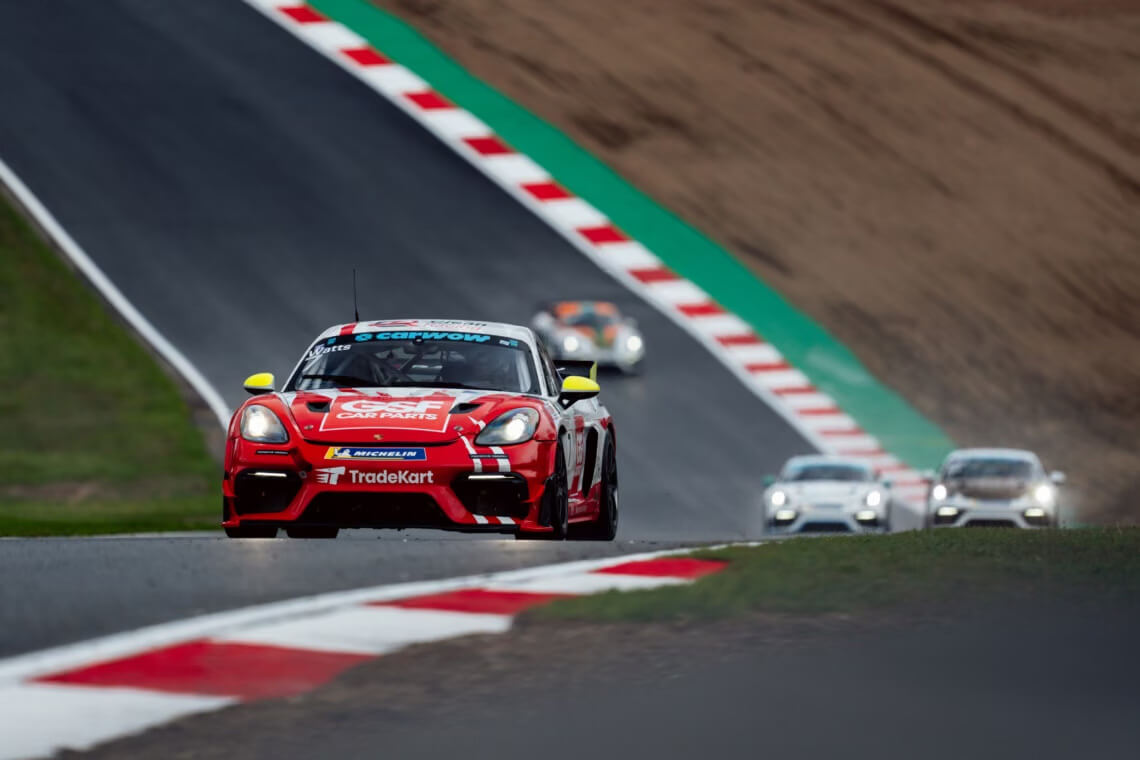 |
|
|
|
|
National Windscreens - open new Tunbridge Wells branch |
|
|
|
|
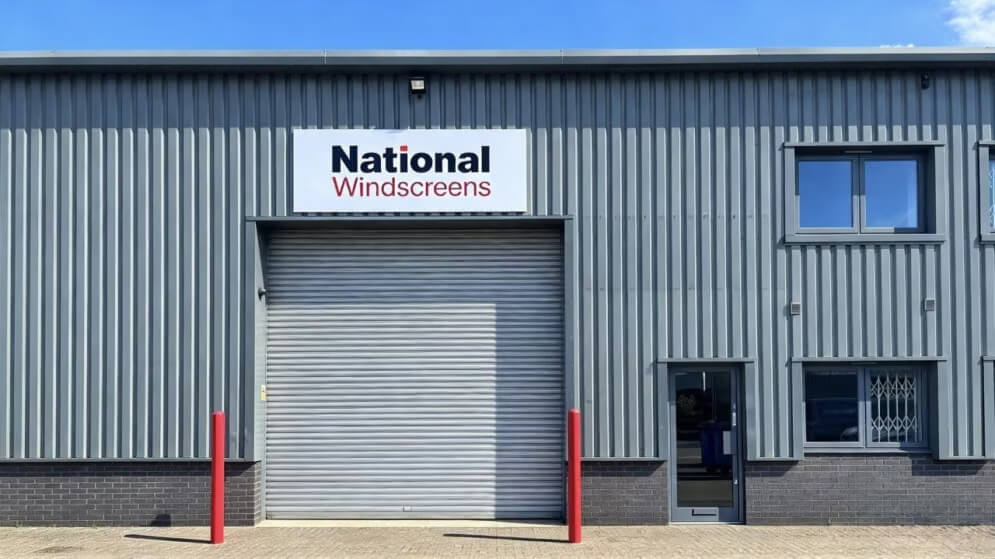
National Windscreens has opened a new Tunbridge Wells branch. This newly opened site provides additional space and improved working conditions for the team, increasing capacity for windscreen repairs, replacements, and ADAS calibrations while supporting growing demand across the local area, said the company.
📍 National Windscreens, Unit 33, Chapman Way, Tunbridge Wells, Kent, TN2 3EF. Michael, Branch Manager, said:
“We’re really pleased with our new larger branch and the team has settled in well. The additional space and improved facilities are already helping us work more efficiently, and we’re looking forward to supporting even more customers.”
|
|
|
|
|
NFDA - comments on the rejection of voluntary restrictions of Chinese hybrid cars |
|
|
On Monday 12 October, China rejected an EU request to voluntarily restrict its exports of hybrid cars by 15%, as part of efforts to protect EU manufacturers from lower-cost imports. This follows recent discussions indicating that Prime Minister Andy Burnham may raise tariffs on Chinese vehicles entering the UK, responding to pressure from the EU to match its 45% tariff rate on Chinese imports.
Speculation remains that Beijing could compensate for the increased tariff rate to maintain competitive vehicle prices for UK and EU consumers.
NFDA highlights that trade restrictions alone will not drive the transition to electric vehicles and urges the government to explore practical policy measures to support consumer uptake. Priority areas include renegotiating the 20% VAT rate on public EV charging to create parity for drivers without driveways, alongside maintaining low Benefit-in-Kind (BiK) rates for company cars. Sue Robinson, Chief Executive of NFDA said:
“Long-term policy certainty and consumer incentives remain critical. While global trade dynamics continue to evolve, NFDA urges the government to focus on practical measures that directly support UK motorists, such as addressing the VAT disparity on public EV charging and maintaining low company car tax rates.” |
|
|
|
|
Noise and vibration - HSE warns employers not to wait until the damage is done |
|
|
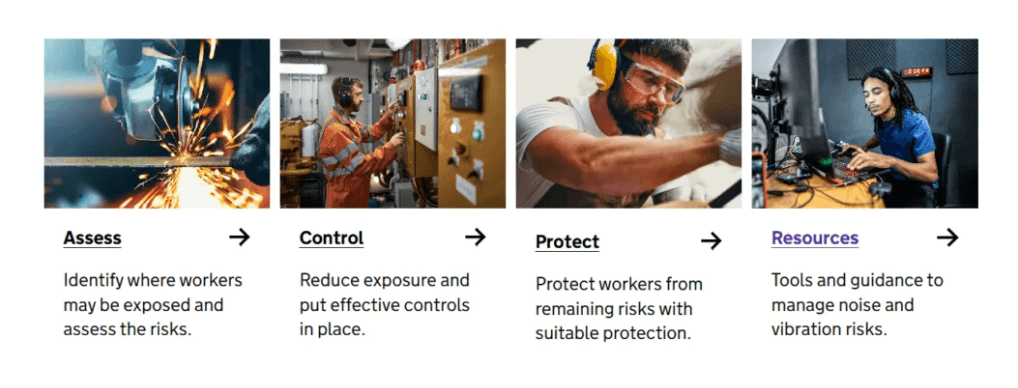 |
New campaign highlights how employers can prevent permanent hearing loss, tinnitus and hand-arm vibration syndrome through effective workplace action - Around 15,000 workers develop hearing problems caused or made worse by work every year, with an estimated one in five exposed to harmful noise levels.
- HSE launches a new campaign during Bone and Joint Health Week, building on its work to reduce HAVS, including the Prevention Programme’s HAVS Risk Reduction Pledge.
- Campaign promotes a simple three-step approach – Assess. Control. Protect. – to help employers prevent permanent, life-changing ill health.
Around 15,000 workers develop hearing problems caused or made worse by work every year, while an estimated one in five workers is exposed to harmful levels of noise at work. The effects can be permanent, with workers often unaware they are being harmed until symptoms begin to appear, by which time some damage may already be irreversible.
The Health and Safety Executive (HSE) is today launching a new campaign urging employers to assess workplace noise and vibration risks, reduce exposure and protect workers from preventable ill health. Launched during Bone and Joint Health Week, and building on HSE’s wider work to reduce Hand-Arm Vibration Syndrome (HAVS), including the Prevention Programme’s HAVS Risk Reduction Pledge, the campaign highlights the importance of taking action before workers’ health is affected.
Risk assessment toolsUse these tools to estimate worker exposure and support your risk assessment.
Noise and vibration are common workplace hazards across sectors including construction, manufacturing, agriculture, utilities, waste management, engineering, maintenance and entertainment and events. Exposure often comes from tools, machinery and equipment used every day.
Prolonged or excessive exposure to noise can cause permanent hearing loss and tinnitus. Hand-arm vibration can lead to HAVS and carpal tunnel syndrome, causing numbness, tingling, pain and reduced grip strength. These conditions can affect workers’ ability to do their jobs and carry out everyday activities, sometimes for the rest of their lives.
Hearing loss can make it difficult to follow conversations with family and friends, while tinnitus can cause persistent ringing or buzzing in the ears, affecting concentration and sleep. For those living with HAVS, everyday tasks such as fastening buttons, holding a cup or using tools can become difficult. Chris Steel, Principal Specialist Inspector (Noise and Vibration), said:
“Noise and vibration-related ill health is preventable, but the consequences can last a lifetime. “Workers may not realise they’re being harmed until their hearing is affected, or they begin to experience pain, numbness or tingling in their hands and arms.
“Employers shouldn’t wait for symptoms to appear. They need to identify where workers are at risk, reduce exposure and make sure the right controls are in place. “We’ve already seen organisations demonstrate their commitment to tackling vibration risks through the HAVS Risk Reduction Pledge. This campaign helps employers turn that commitment into practical action.
“Taking action early can protect workers’ health and prevent conditions that can affect their lives for years to come.” Employers have legal duties to assess and control workplace noise and vibration risks under the Control of Noise at Work Regulations 2005 and the Control of Vibration at Work Regulations 2005.
HSE’s campaign encourages employers to follow three simple steps: 1. Assess Identify who may be exposed to noise and vibration, understand the risks and carry out suitable and sufficient risk assessments.
2. Control Reduce exposure at source by choosing quieter or lower-vibration equipment, maintaining tools and machinery, introducing engineering controls and adopting safer ways of working. 3. Protect
Where risks remain, provide suitable hearing protection, arrange health surveillance where required, and give workers the information, instruction and training they need to protect themselves. The campaign provides practical tools, guidance and resources to help employers assess workplace risks, put effective controls in place and prevent life-changing occupational ill health.
The campaign complements HSE’s Prevention Programme to reduce vibration-related ill health, including the HAVS Risk Reduction Pledge. The pledge encourages organisations to commit to reducing vibration-related ill health through effective risk management, worker involvement and long-term prevention. Employers can find out more and sign the pledge at https://www.councilforworkandhealth.org.uk/news/havs-risk-reduction-pledge-get-involved-and-sign-the-pledge/
For advice and practical resources, visit HSE’s Noise and Vibration campaign website. |
 |
|
|
|
|
OSRAM - ECE approved LED retrofit bulbs are now MOT compliant |
|
|
|
|
After working closely with the Department for Transport and DVSA for over two years, automotive bulb manufacturer, OSRAM said it has been "instrumental" in changing the lighting portion of the MOT, that has led to ECE approved LED retrofit bulbs now being MOT compliant.
The ECE R37 approval marking on the bulb is a European standard that sets performance requirements for vehicle lighting. This is enforced in the UK through existing regulations, such as the Road Vehicles Lighting Regulations 1989, which states that approved ECE R37 bulbs can be used in all headlamp units, as long as they are aligned correctly. However until now, LED retrofit bulbs would fail the MOT due to “light source and lamp not [being] compatible”.
While the ECE R37 marking and Road Vehicles Lighting Regulations 1989 stated ECE bulbs were approved, the MOT test states: 4.1.4. Compliance with requirements - Existing halogen headlamp units on vehicles first used on or after 1 April 1986 must not be converted to be used with high intensity discharge (HID) or light emitting diode (LED) bulbs. If such a conversion has been done, you must fail the headlamp for light source and lamp not compatible.
Now, together with the Department for Transport and DVSA, the wording in the MOT has been updated to reflect the advancements in lighting technology and reduce the confusion around this issue, making LED bulbs that have the ECE R37 approval, legal and MOT compliant.
Alongside the change in the MOT, bulb suppliers will also need to include a security sticker in the packaging to showcase to technicians that the bulbs are MOT compliant. This unique sticker will need to be applied near the lamp housing to confirm that the bulbs installed are ECE approved and comply.
OSRAM’s Product Manager for Bulbs and Vehicle Lighting, Carl Harrison, commented:
“There has been a lot of work behind the scenes on this issue and we are thrilled the hard work of everyone involved has paid off. We want to thank the DVSA and Department for Transport for their assistance on this matter. There has been a lot of confusion on this subject for years, but with this change, we are moving forward with the technology on our roads and helping to keep drivers safe.
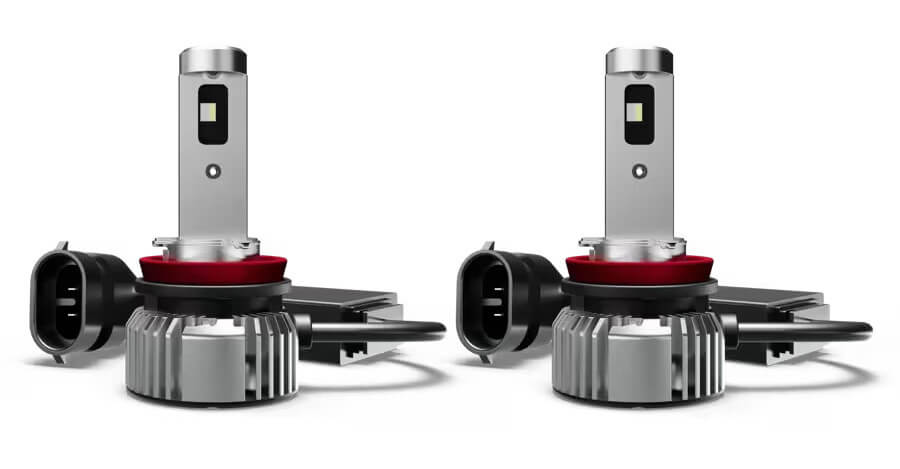
“Currently only OSRAM’s H11 and C5W types are included in the latest edition of UNECE Regulation 37, with a programme of further types being added over the next two to three years.
“OSRAM will continue to pioneer in this area, we already have the NIGHT BREAKER LED SMART ‘ECE’ H11, the first fully ECE R37 homologated LED retrofit bulb, as well as the NIGHT BREAKER LED C5W ECE, which was the first ECE R37 approved LED auxiliary bulb. With more ECE approved bulbs to come to market in the coming months, OSRAM remain dedicated to helping technicians and therefore, drivers, wherever we can to keep them road ready and safer.”
DVSA’s Head of MOT, Grant Thunder, commented:
“We want to make it easier and quicker to identify ECE approved LED replacement bulbs. We’ve worked closely with the Department for Transport and lighting manufacturers to develop a practical way to identify these replacement light sources during MOT testing.
“ECE approved LED light sources will be sold with an approval sticker, which must be applied to the vehicle for MOT testers to identify whether an approved LED light source is fitted. This will make sure that those fitted with non-approved LED light sources continue to fail their MOT test.” |
|
|
|
|
The AA - launches new podcast The Road Ahead |
|
|
|
|
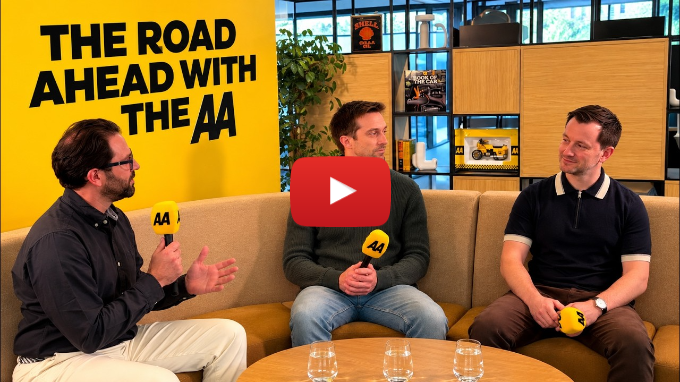
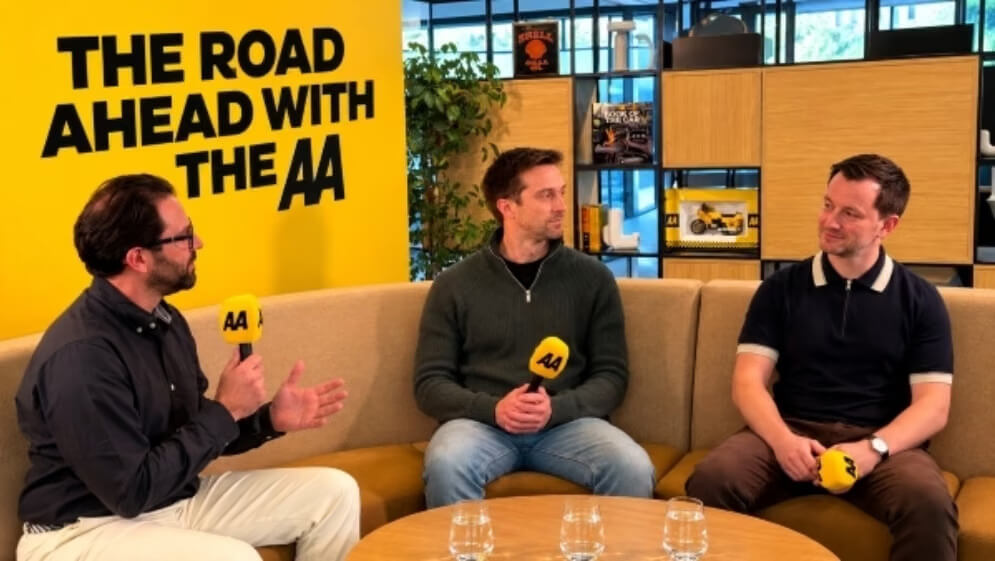
The AA has launched a new podcast bringing together experts and industry voices to discuss the big issues affecting drivers and the future of motoring. The Road Ahead with The AA is hosted by Jack Cousens, AA Head of Roads Policy, with each episode taking a deeper look at a different motoring topic and the questions drivers want answered.
From road safety and the cost of driving to new technology and the changing way we travel, the podcast will draw on expertise from across The AA alongside guests from the wider motoring industry. The Road Ahead podcast starts with electric vehicles
The opening episode focuses on electric vehicles, with Jack joined by Jamie Muir from AA Cars and Charlie Cook, Founder and CEO of Rightcharge.
The trio discuss some of the biggest questions facing drivers who are considering making the switch to electric, including how far modern EVs can travel, the availability and cost of charging and whether owning an EV is practical for drivers without access to a driveway or dedicated off-street parking. Are used electric cars becoming cheaper?
Affordability is also put under the spotlight. Jamie discusses how the used EV market is changing, explaining that while electric cars have traditionally been more expensive than their petrol and diesel equivalents, some used EVs are now becoming cheaper. EV charging, range and battery life explained
The episode also looks at concerns around the lifespan of EV batteries. Jamie and Charlie discuss what experience from electric cars already on the road tells us about battery degradation, while sharing their own experiences of driving and living with EVs. Charlie explains the difference between charging at home and relying on the public charging network, as well as how drivers can investigate the charging options available where they live and on the journeys they regularly make.
The conversation also looks ahead to the future of electric motoring and what could help more drivers make the switch. Episode one of The Road Ahead with The AA is available now.
Watch the video on The AA’s YouTube channel. Listen to the audio podcast on Spotify, Apple Podcasts and other major podcast platforms. |
 |
|
|
|
|
Volvo - new £33k Volvo EX30 Cargo secures Zero Emission Van Grant |
|
|
|
|
The fully electric Volvo EX30 Cargo is now eligible for a discount under the UK Government’s Zero Emission Van Grant (ZEVG), giving business and fleet customers further support to make the switch to electric commercial vehicles.
The grant is designed for eligible electric vans and is separate from the Electric Car Grant for passenger vehicles. Its availability for the EX30 Cargo will reduce the vehicle’s purchase price by £2,500, making its zero-tailpipe-emission driving, load space and premium specification more accessible to fleets.
Developed from the fully electric EX30 compact SUV, the car-derived van is available as the EX30 Cargo and EX30 Cross Country Cargo, with the latter offering increased ground clearance. Both are sold exclusively through Volvo’s fleet sales channels.
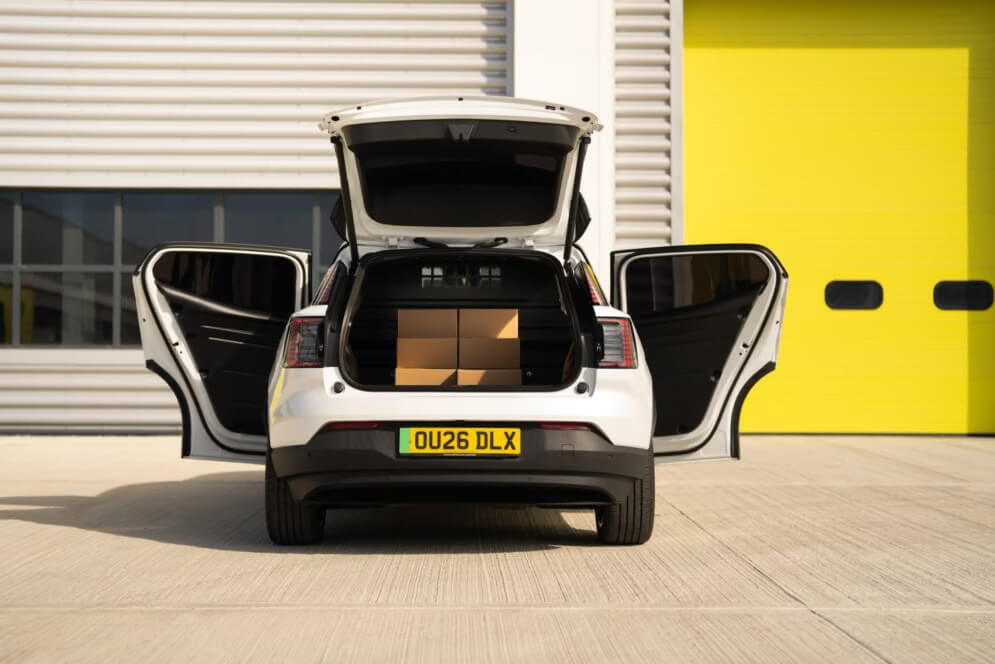
The Cargo conversion replaces the rear seats with a flat load floor and access to the lower floor, providing a payload of up to 390kg and a load capacity of 1,000 litres. A specially designed bulkhead separates the cabin from the cargo area, while modified rear side panels and doors maximise usable space.
Wider-opening rear doors make loading easier, an additional work light improves visibility in the cargo area and the underfloor subframe provides extra securing and mounting points for various commercial uses.
Jack Munford, Head of Fleet at Volvo Car UK, said: “Eligibility for the Zero Emission Van Grant makes the EX30 Cargo an even more compelling option for businesses looking to electrify their fleets. It gives customers valuable support with the initial purchase cost while allowing them to choose a compact commercial vehicle that offers the safety, comfort and technology that Volvo is so well known for.”
Created through a second-stage conversion by Volvo Car UK, the Cargo can be specified on newly ordered vehicles or applied to existing stock across Model Year 2026 and Model Year 2027 vehicles. Available powertrains include the P3 (150hp) and P5 (272hp), while Core, Plus and Cross Country Plus trims offer a choice of specifications.
Standard equipment includes Safe Space Technology, Google Automotive Services, Adaptive Cruise Control, front and rear Park Assist, a rear-view camera, wireless smartphone connectivity, automatic LED headlights and an efficient heat pump.
The EX30 Cargo is on sale now, priced from £33,529 OTR after application of the Zero Emission Van Grant. |
|
|
|
|






















 CONTACTS
 fiona@abpclub.com
 01455 614909
 www.abpclub.co.uk