How did lost medieval manuscript pages resurface in Brighton?
|
|
|
|
|
Wednesday 30 September 2026
|
|
|
|
Sussex researchers to play leading role in pioneering NASA mission |
|
|
University of Sussex astrophysicist, Professor Seb Oliver, is leading the UK's contribution to a pioneering NASA space mission that could transform our understanding of how planets, stars, galaxies and black holes formed.
The PRobe far-Infrared Mission for Astrophysics (PRIMA) will use a specialised space telescope to observe the universe in far-infrared light, revealing parts of it that are impossible to observe with ordinary telescopes. It builds on more than four decades of pioneering far-infrared space astronomy at Sussex. |
|
|
Nicky Fox, NASA’s Associate Administrator for Science, said: “The PRIMA mission is humanity’s next window into the deep universe. It will unveil the obscure across cosmic time to better understand the formation of planets, stars, black holes, and even how water on Earth came to be.”
At Sussex, PhD researcher James Donnellan and Research Associate Borja Pautasso have helped develop and validate techniques to enhance the resolution of PRIMA’s observations. Their work underpins much of the mission’s anticipated scientific capability.
Professor Oliver said: “Our software developments at Sussex have helped show that PRIMA can deliver the transformational science that motivated the mission.”
Read the full story on the University of Sussex website |
|
|
Sussex researcher helps rediscover lost Tudor manuscript pages |
|
|
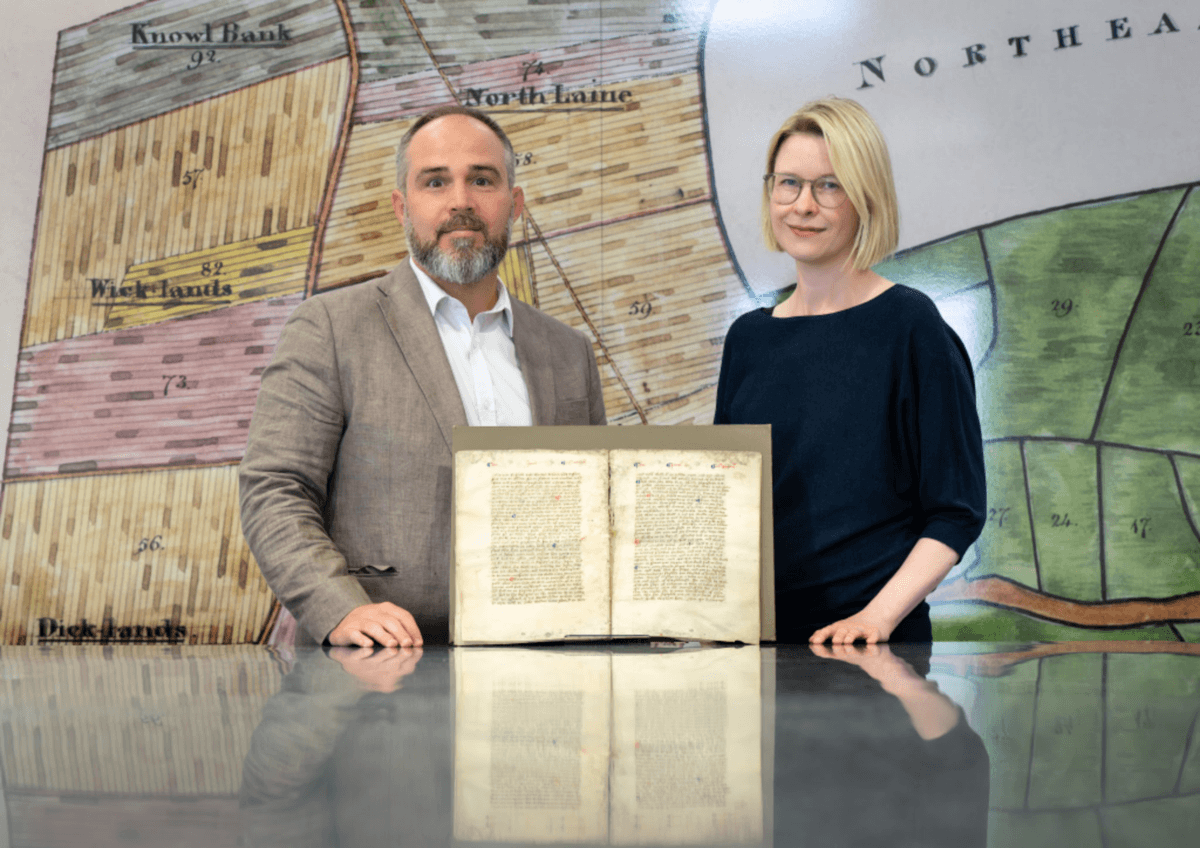 |
Dr Katie Walter and Dr James Wade at The Keep, Brighton |
|
Six missing pages from a medieval manuscript have been discovered at The Keep archive in Brighton by University of Sussex researcher Dr Katie Walter and Dr James Wade from the University of Cambridge.
The pages belong to a 15th-century religious text by Nicholas Love, which became controversial during the English Reformation because of its Catholic teachings. |
|
|
The fragment had been deposited at The Keep nearly a century ago, while the remainder of the manuscript is now held at Yale University.
Dr Walter and Dr Wade made the connection after examining a digitised version of the Yale manuscript and identifying a gap in the text that matched the pages held at The Keep. The handwriting and missing text provided further evidence that the fragments came from the same book.
The discovery also sheds new light on Sir John Gage, who helped Henry VIII oversee the dissolution of the monasteries, including in Sussex. Yet, despite his role in dismantling monastic institutions, Gage appears to have preserved this particular Catholic book.
Dr Walter said: “We often associate this period with book burning and destruction, so this manuscript’s story goes a bit against that grain. It reminds us that people were also rescuing, valuing and caring for books.”
Read more about the discovery on the University of Sussex website |
|
|
Thirty years on: how Sussex is building on its C60 Nobel Prize legacy |
|
|
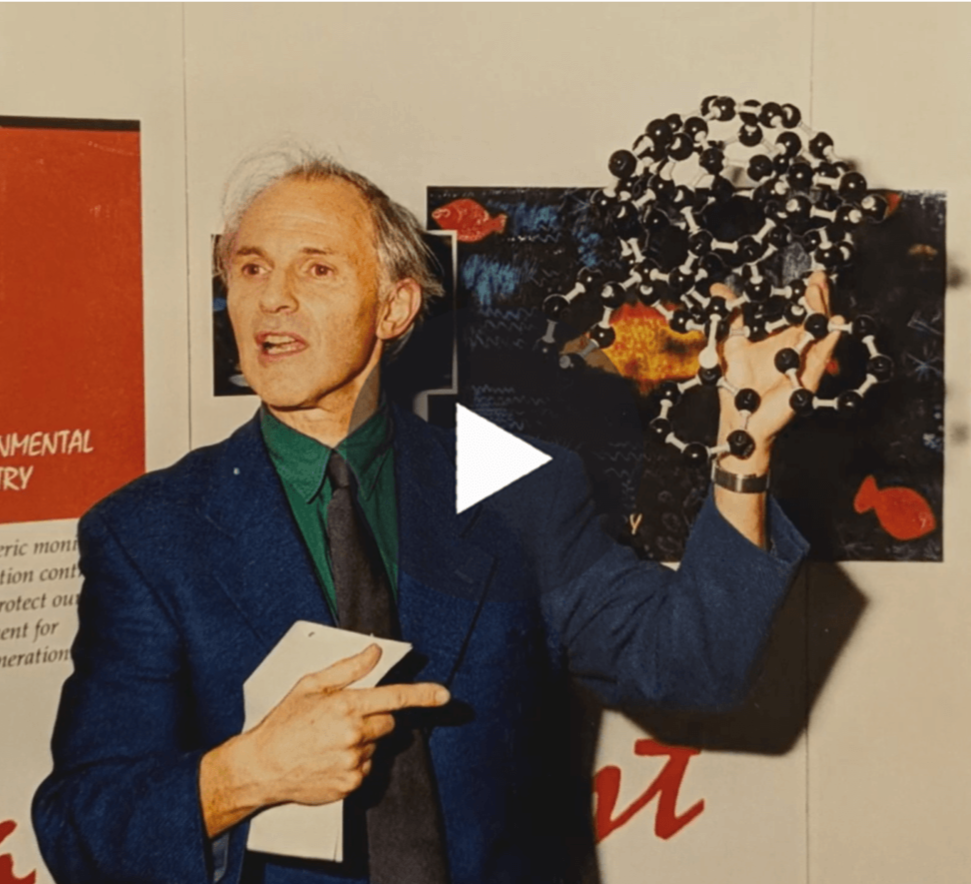
| Watch the story of Sir Harry Kroto and the discovery of C60 |
|
In 1996, Sussex Professor Sir Harry Kroto shared the Nobel Prize in Chemistry with collaborators Robert F. Curl Jr. and Richard E. Smalley for the discovery of C60, a previously unknown form of carbon made of 60 carbon atoms arranged in a tiny football-like structure.
The discovery didn't just add another molecule to chemistry textbooks. It helped open up entirely new fields of research, including nanoscience and nanotechnology, which are still being explored today. |
|
|
That legacy continues in research taking place across Sussex, where scientists are exploring how carbon-based molecules and nanomaterials could help create new technologies and improve lives.
At Sussex, Professor Richard Layfield is studying molecules that can act as tiny magnets. A single-molecule magnet could potentially store a piece of information, opening up possibilities for future technologies that use far smaller components than conventional devices.
Dr Alice King is investigating how carbon-based materials can interact with biological systems, with potential applications including wearable biosensors that monitor how hard critically ill patients are working to breathe.
Professor Alan Dalton is turning advances in carbon nanoscience into useful materials, with applications including sustainable electronics and intelligent surfaces that can sense, respond to and manage their environment.
Their research will feature in a special event at Sussex on 6 October, marking 30 years since the C60 Nobel Prize was awarded. |
|
|
|
Comment: Could Lewes’ recognition of tree rights change how we value nature? |
|
|
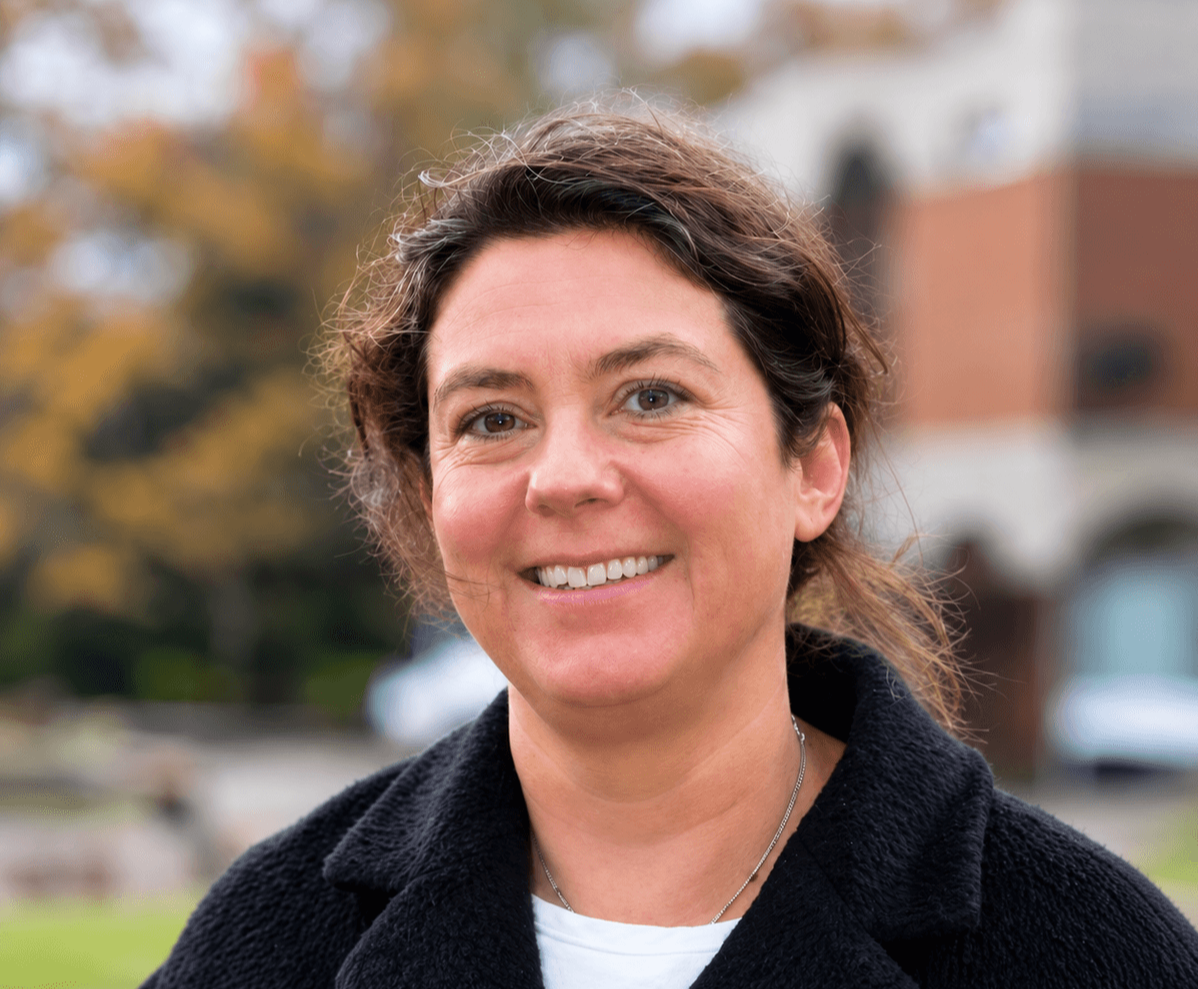
By Dr Joanna Smallwood
In September, Lewes became the first town in England to recognise the rights of all trees by adopting a Tree Charter developed by the Rights of our Trees group (ROOTs).
The Charter was guided by the Rights of Trees, Woodlands and Forests Toolkit, which I created with students at the University of Sussex Environmental Justice Law Clinic. |
|
|
Recognising the rights of trees at this local level of governance sets out practical commitments and next steps for the Town Council. These include supporting tree guardianship, developing a local Rights of Trees Strategy, protecting significant trees, and working with local partners to strengthen Lewes’ natural environment for future generations.
Beyond these commitments, the Charter starts new conversations in Lewes and elsewhere about the intrinsic value of trees. It invites us to see trees as living beings within communities of which humans are part, with value in themselves, rather than simply as objects, resources, commodities or assets. This approach is in line with the rapidly growing global Rights of Nature movement. While the Charter does not create legally enforceable rights in England, developments elsewhere show what stronger legal recognition can look like. Ecuador’s courts have applied constitutional Rights of Nature to the Los Cedros forest, while New Zealand law recognises Te Urewera as a legal entity.
Rights-based approaches recognise trees’ inherent value and call for stronger protection, especially for ancient, veteran and other significant trees under threat. They also encourage carefully planned restoration. Many towns, including Lewes, fall short of recommended tree canopy cover, while access to trees remains unequal. Rights of Nature offers one way to build better relationships with the rest of nature and move towards living in harmony with it.
It was an emotional and proud moment to see our toolkit used so effectively when Lewes Town Council unanimously adopted the motion we had helped to draft. The response in the UK and beyond has been remarkable. I hope many more communities will take inspiration from Lewes, Rother and other rights of trees initiatives.
Dr Joanna Smallwood is Associate Professor in Law and lead of the Environmental Justice Law Clinic at the University of Sussex School of Law, Politics and Sociology. |
|
|
|
|
Dr Katie Walter’s research into six missing pages from a Tudor manuscript linked to the reign of Henry VIII (as featured above) received widespread national and international coverage, featuring in The Independent, BBC News, The Times, The Telegraph, Scientific American and Smithsonian. Dr Walter was also interviewed about the discovery on BBC Radio Sussex.
Dr Joanna Smallwood (as featured above) was interviewed by ITV Meridian and The Times as the Lewes Rights of Trees story continues to attract media attention.
Professor Thomas Nowotny spoke to BBC Radio Scotland about whether artificial intelligence could develop into a new “silicon species” and what this could mean for humans.
Dr Iftikhar Hussain discussed Ofsted inspections and teacher wellbeing in a letter published in The Guardian, drawing on his research into accountability in education.
Professor Gillian Forrester began her regular monthly spot as a science correspondent on BBC Radio Sussex’s Sound Advice (from 1:42), also broadcast on BBC Radio Surrey. |
|
|
|
We hope you have enjoyed this edition of Research at Sussex. Know someone else who might enjoy it? They can subscribe here.
Help us shape future editions. We would really value your feedback and ideas for content that you would like to see. Please send your thoughts to Campaigns@sussex.ac.uk. |
|
|
|
|
|