What could inspire the next generation of scientists?

                View this email online, follow this link

This email is being sent to all University of Sussex staff.

University of Sussex logo centred on a colourful geometric banner in yellow, green, purple, peach and dark teal.

Research at Sussex

                                                                                           Wednesday 16 September 2026

Welcome back to Research at Sussex, a fortnightly round-up of the latest research news, insights and discoveries at the University of Sussex.


As a Sussex member of staff, you are receiving this newsletter directly to your inbox. It is also open to anyone outside the University, so feel free to share it with friends, colleagues, or collaborators who might be interested in keeping up with our latest research highlights. They can subscribe here.


In this edition:


• How could data science help promising medicines progress more efficiently?


• What could inspire the next generation to pursue a career in science?


• How can schools and colleges tell if their approach to mental health and wellbeing is working?

Sussex data science partnership aims to speed up

pharmaceutical development 

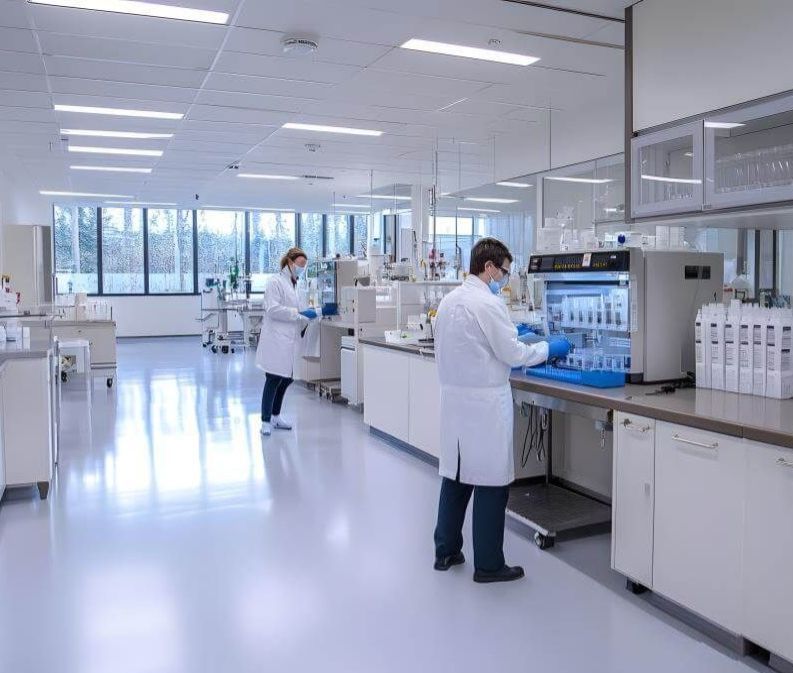
Two scientists in white lab coats work at benches in a bright pharmaceutical laboratory.

Sussex researchers are bringing data science expertise to a new partnership aimed at helping pharmaceutical developers make better use of information generated during drug development. 


The £375,000 Knowledge Transfer Partnership with Custom Pharmaceuticals will use advanced data analytics and predictive modelling to develop new ways of analysing information from early-stage pharmaceutical development. 

Drug development generates large amounts of data about formulations, testing and manufacturing processes, but this information can sit across different projects and systems, making useful patterns difficult to spot. 


Project lead Dr Marianna Cerasuolo, Reader in Numerical Analysis and Scientific Computation at the University of Sussex, and academic supervisor Dr Ivor Simpson, Associate Professor in Artificial Intelligence, will help develop tools to identify potential development risks earlier, reduce unnecessary experiments and support more informed decisions about which approaches to pursue. 


Dr Cerasuolo said: “Pharmaceutical development generates a large amount of data, but its full potential is not always realised. Our aim is to bring together our expertise in data science, AI and mathematical modelling to find patterns that would otherwise be difficult to see. By learning more from existing data, we will help Custom Pharmaceuticals to identify potential problems earlier, make better-informed decisions, and focus time and resources on the most promising approaches.” 


The project could ultimately help promising medicines progress more efficiently towards clinical evaluation. 

Sussex quantum pioneer inspires next generation of scientists 

Professor Winfried Hensinger in the Sussex quantum lab, with purple-lit quantum computing equipment, a play button and the on-screen caption: “a million qubit quantum computer."Professor Winfried Hensinger in the Sussex quantum lab, with purple-lit quantum computing equipment, a play button and the on-screen caption: “a million qubit quantum computer."

Professor Winfried Hensinger, quantum scientist at the University of Sussex, has a dedicated chapter in Scientists Making a Difference, a new book published on Thursday 10 September to inspire young people to explore careers in science.


Every state-funded secondary school in the UK will receive two free copies of the book, alongside a school kit with lesson plans and teaching resources. 

Professor Hensinger’s chapter explores his work at Sussex developing and building practical quantum computers. 


Unlike classical computers, quantum computers use quantum bits, or qubits, to tackle calculations beyond the practical reach of classical computers. Professor Hensinger, Director of the Sussex Centre for Quantum Technologies, and his team have developed a modular approach that links separate quantum computing chips and transports ions between them at record speed, opening the possibility of machines containing millions of qubits. This could allow quantum computers to solve in minutes calculations that could take classical computers hundreds of years.


If successfully scaled up, quantum computers could help reduce the time and cost of developing new medicines, support faster medical diagnosis and even help make aircraft engines more fuel efficient. 


Watch this video to step inside the quantum lab and hear Professor Hensinger reflect on Sussex’s world-leading achievements while explaining just how far the technology could take us. 

Comment: How can schools and colleges know if their approach to mental health and wellbeing is working? 

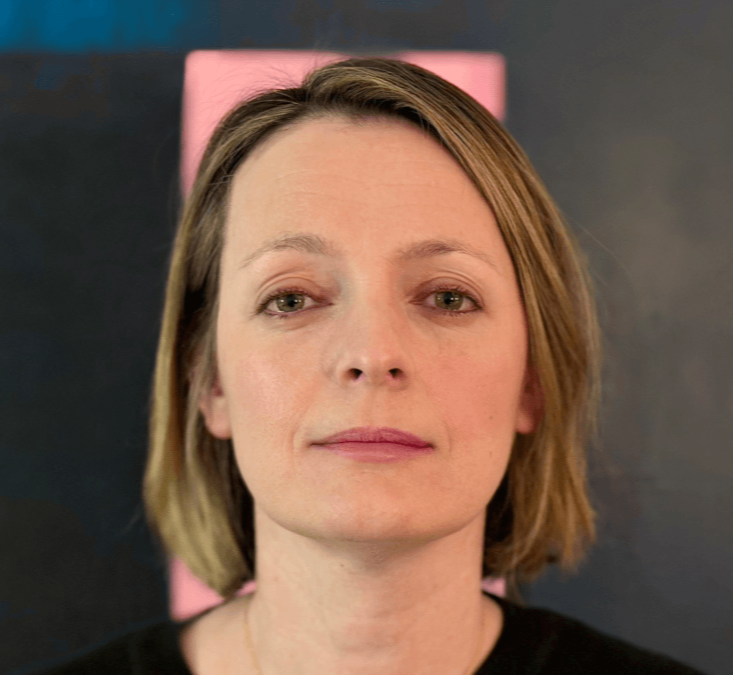
Portrait photograph of Dr Kathryn Lester against a dark background, wearing a black top and looking towards the camera.

By Kathryn Lester 


Every school and college in England is encouraged to take a whole school and college approach (WSCA) to mental health and wellbeing. WSCA embeds wellbeing across a setting, from leadership and ethos to curriculum, staff development, student voice and work with families.


But how does a school or college know its approach is working? Our research suggests two things need to be in place. 

The first is priority. A WSCA becomes embedded when an educational setting treats it as core business rather than an afterthought. Governors and trustees have a crucial role in setting that direction. Yet when we looked at how well schools were implementing WSCA, governors were the group with the least support. Our survey of over 250 governors found wide variation in their understanding of what WSCA is, what good practice looks like and how to evidence it.  


Our recently launched Mental Health in Schools and Colleges: Essential Resource for Governing Boards fills that gap, giving practical tools to strengthen oversight and move from good intentions to measurable impact. 


The second is evidence. Schools and colleges are already doing good work, but our research found that while individual interventions for mental health are often evaluated, the impact of WSCA work almost never is.  


Our WSCA Measurement Toolkit addresses this directly. Its two self-assessment tools measure how fully WSCA is implemented and what outcomes it achieves. Data from 335 settings across England show that fuller implementation is consistently associated with better outcomes. For an individual setting, the results highlight where practice is strong and where improvement is needed, helping leaders and governing boards decide what to prioritise next. 


Schools and colleges know their approach is working when mental health and wellbeing are treated as a board-level priority, leaders can show how fully WSCA is embedded and what outcomes it is producing, and governors and leaders use that evidence together to decide where to focus next.  


That is what these resources are designed to enable: healthier environments for students and staff to flourish. 


Dr Kathryn Lester is Associate Professor in Psychology at the University of Sussex. 

Sussex in the media

Dr Joanna Miller Smallwood was interviewed on BBC Radio 4 about Lewes becoming the first town in England to recognise the rights of all trees, following guidance from a toolkit developed by Sussex’s Environmental Justice Law Clinic. BBC News and The Times also covered the story.


Dr Jessica Eccles spoke to BBC News about her research into Hypermobility Spectrum Disorder. She also provided expert commentary on ADHD following Channel 4’s The Great ADHD Myth?, with her views featured in the Science Media Centre and MQ Mental Health Research.


Professor Julia Simner joined BBC Radio 4’s Best Medicine to discuss AI-powered glasses she helped develop to support people living with dementia.


Professor Anil Seth spoke to The Indian Express about whether recent advances in AI bring us any closer to creating conscious machines, with related commentary featured in Live Science.


Dr Gillian Sandstrom featured in BBC Science Focus, discussing how everyday social interactions, including talking to strangers, can boost wellbeing and help people feel more connected.

We hope you have enjoyed this edition of Research at Sussex. Know someone else who might enjoy it? They can subscribe here.


Help us shape future editions. We would really value your feedback and ideas for content that you would like to see. Please send your thoughts to Campaigns@sussex.ac.uk.

 
This message was sent to r.a.french@sussex.ac.uk using NewZapp. Follow this link to Manage Preferences.