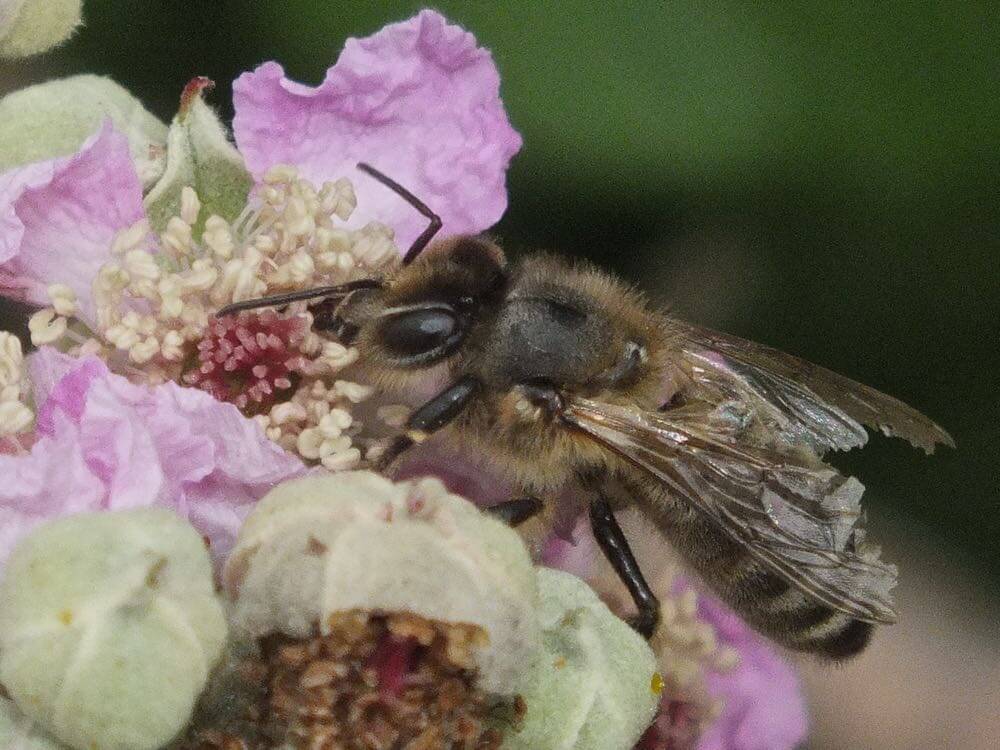
Why is August such a difficult month for honeybees?
|
|
|
This email is being sent to all University of Sussex staff. |
|
|
|
|
Thursday 3 September 2026
|
|
|
|
Sussex climate scientists solve monsoon puzzle anduncover risks to fishing communities |
|
|
A new study, co-authored by Professor Felix Creutzig, Bennett Chair at the University of Sussex, has solved a decades-old puzzle surrounding the South Asian summer monsoon, one of the world’s most important climate systems. It brings vital rainfall to the Indian subcontinent and helps sustain productive marine ecosystems and the fishing communities that depend on them.
|
|
|
Geological records from land and sea have long appeared to tell conflicting stories about how the monsoon has changed over many thousands of years. The international research team, including researchers from the University of Sussex, Nanjing University and Ohio State University, discovered that rainfall over South Asia is mainly driven by conditions in the Northern Hemisphere, while nutrient-rich waters rising to the surface of the Arabian Sea are influenced by conditions in the Southern Hemisphere.
Professor Creutzig said: “As well as solving a major paleoclimate puzzle this discovery highlights a modern-day risk as rising temperatures outside South Asia may alter the whole monsoon system, posing serious threats to fishing stocks and livelihoods.”
Read more about the study on the University of Sussex website |
|
|
Honeybees struggle to gather nectar in August, new Sussex study reveals |
|
|
Letting late-summer weeds grow could help honeybees when nectar is hardest to find.
Researchers Dr Nicholas Balfour, Dr Ciaran Harris and Professor Francis Ratnieks at the University of Sussex discovered that honeybees find it hardest to forage for nectar in late summer, particularly in August, when fewer flowers are in bloom and more pollinators compete for them.
|
|
|
Their study, published in the British Ecological Society journal Functional Ecology, is the first to directly measure seasonal changes in the energy honeybees expend and gain while foraging.
Studying more than 1,200 honeybees in and around Brighton and Edinburgh between April and October, the researchers compared the energy they spent foraging with the energy gained from nectar. They found similar seasonal patterns in both cities, despite them being around 600km apart, suggesting late summer may be a challenging period.
Dr Harris said: “Encouraging flowers that bloom in late summer when bees find it more challenging to gather nectar or pollen will be more valuable for helping them. This could be achieved by planting late-summer blooming flowers, adjusting when lawns are mown, or being more tolerant of summer-blooming ‘weeds’ like thistle, ragwort, and knapweed.”
The findings could have implications for other pollinating insects too, particularly as heatwaves reduce nectar availability and disrupt flowering times.
Read more about the study on the University of Sussex website |
|
|
|
Comment: Can the circular economy be just if it overlooks theGlobal South? |
|
|
By Dr Shyamain Wickramasingha
The idea for this project goes back to my childhood in a rural Sri Lankan community where circular economy practices were part of everyday life.
Born out of necessity rather than policy or business intervention, the clothes we wore never became waste. They went through multiple lives – from garments to bedding, rugs, table mats and toys, ultimately ending up as wicks for oil lamps and makeshift torches.
|
|
|
Decades later, while doing fieldwork in Dhaka, Bangladesh, I saw the same pattern on an industrial scale, with businesses processing the ‘waste’ of global garment factories. Across the Global South, generations of craftsmanship and know-how have created economic opportunities for millions of people, many of them women.
Yet these practices are rarely recognised in mainstream thinking about the circular economy. More than 95% of circular economy research and innovation is based in and led by the Global North. This matters because policies designed in the North can have consequences for people and industries in the South that have managed textile waste for decades.
I have just been awarded a €1,515,661 European Research Council Starting Grant to develop Circular Global Value Chains (Circular GVCs), a five-year research project addressing this gap. It will examine circular economy policy in the EU and UK alongside textile industries in Bangladesh and Ghana.
The project will explore how practices in the Global South could contribute to a more circular textile industry, while examining the effects of policies on jobs, livelihoods, gender and inequality.
Hosted by the University of Sussex’s School of Global Studies, Circular GVCs will put questions of power, justice and inclusion at the heart of the circular economy debate – helping us ask not only how we make our economies more circular, but who benefits from that transition.
Dr Shyamain Wickramasingha is Senior Research Fellow at the Science Policy Research Unit (SPRU), University of Sussex Business School. |
|
|
|
|
The Economist featured Professor Anil Seth in a major briefing on whether large language models (LLMs) could ever become conscious, including his view that biological traits may be necessary for consciousness.
BBC Radio 4 featured Dr Gillian Sandstrom discussing the value of talking to strangers and why psychological distance can sometimes make difficult conversations easier.
New Sussex research into why August can be particularly difficult for honeybees (as featured above) was covered by The Times of India, with further coverage across German media.
Professor Gillian Forrester appeared in a 3sat documentary exploring the tongue as a sensory and motor organ, featuring footage from the Sussex Baby Lab.
Professor Piotr Cieplak wrote an article for The Conversation exploring why the film Stop That Train! works as “the best kind of silly”, drawing on his expertise in visual cultures and creative practice.
A new University of Sussex partnership using data science to help improve pharmaceutical development was covered by Genetic Engineering & Biotechnology News, Scientist Live and PharmaSource.
|
|
|
|
We hope you have enjoyed this edition of Research at Sussex. Know someone else who might enjoy it? They can subscribe here.
Help us shape future editions. We would really value your feedback and ideas for content that you would like to see. Please send your thoughts to Campaigns@sussex.ac.uk. |
|
|
|
|
|