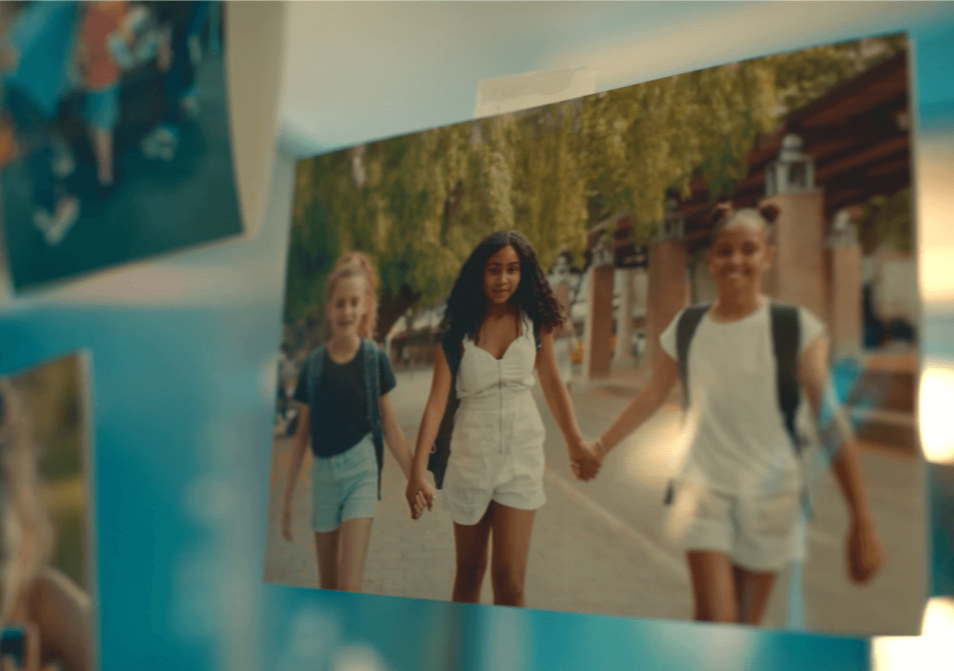
Why do we experience the same world differently?
|
|
|
This email is being sent to all University of Sussex staff. |
|
|
|
|
|
|
Sussex researcher wins fellowship to explore conscious experience |
|
|
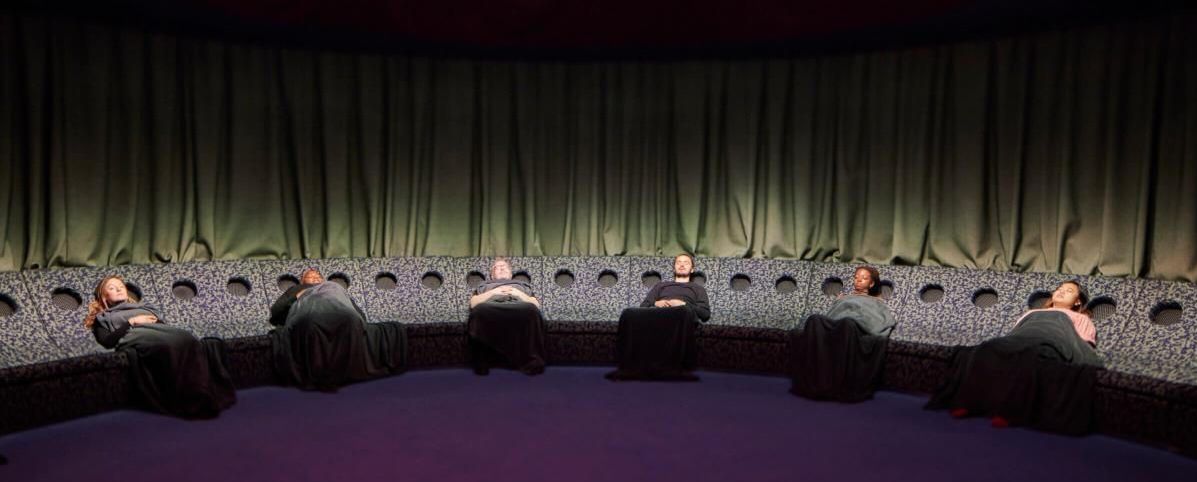 |
Dreamachine participants during the live experience. Dr Hirschhorn’s research will use data from the related Perception Census. Photo: David Levene |
Sussex neuroscientist Dr Rony Hirschhorn has been awarded a £342,000 British Academy Postdoctoral Fellowship to explore one of the biggest questions in consciousness research:
how much of the world around us do we actually experience?
Researchers have long debated whether our visual experience is “rich”, meaning we consciously take in a great deal of detail from the world around us, or “sparse”, meaning we are aware of much less than it seems and our sense of seeing a complete, detailed world may partly be an illusion.
Dr Hirschhorn’s project, Exploring the Richness of Conscious Perception, will challenge this either-or view. Drawing on new experiments and data from more than 33,000 participants in the Perception Census, a large-scale study exploring how people experience the world differently, the research aims to build a more nuanced understanding of conscious perception and shed new light on how and why people can experience the same world differently.
Dr Hirschhorn said: “I'm honoured to receive this fellowship from the British Academy, and really excited to be doing this work at Sussex. Researchers have argued for decades about whether we consciously see a great deal of the world, or very little. If we can separate the ingredients that make experience feel detailed and see how they build up over time, we can hopefully get a better picture of our visual experiences.” |
|
|
|
Sussex study to improve joined-up support for young people |
|
|
A cross-disciplinary University of Sussex team has been awarded £250,000 by the Nuffield Foundation to explore how organisations, systems and professionals can work together more effectively to support children and young people.
The multi-site Joined up lives project will focus on those whose experiences span education, social care and criminal justice.
|
|
|
Many face overlapping challenges, including educational disadvantage, care experience, exclusion and exploitation, while receiving support from several agencies that do not always work together in ways that reflect the complexity of their lives.
The research will put children and young people’s experiences at the centre of efforts to improve collaboration across education, care and justice, building evidence to inform policies and practices that support safer, fairer and more connected futures.
Dr Simon Flacks, who is leading the study, said: “We are really excited about this study. The path from social care experience and educational disadvantage to criminal justice involvement is well established, but this trajectory is not inevitable and our aim is to find out where and how multi-agency intervention can help.”
Researchers from Law, Education and Social Work began collaborating through Sussex’s Centre for Research and Innovation in Childhood and Youth. Working with four local authorities, they will examine current support, identify effective practice and develop practical recommendations. |
|
|
Comment: Can experiencing alternative futures help us create them? |
|
|
By Ann Light
Can collective experiences of alternative futures help us address the environmental and social challenges we face today? And can these experiences inspire hope and encourage us to explore new ways of relating to one another and the world around us?
I believe the answer to both is yes. Where scientific consensus alone has failed to translate into action, creative practices focused on participation and immersion can help us become more open to uncertain futures.
|
|
|
A new open-access book I have co-edited with Harry Lewis, published on 10 August, brings together examples of how this is possible. The cases draw from performance, theatre, games, participatory design, socially engaged art and live-action role-play, showing that no single field has a monopoly on this work and highlighting the importance of the arts and humanities in helping societies find new sources of meaning.
Twenty authors from across Europe and beyond offer inspiration for tackling interconnected ecological, cultural and social challenges. Each story offers a positive reminder of what groups can do together when invited to consider the worlds they want and how they might get there.
From English coastal towns planning long-term solidarity, to creative recycling discussions in Denmark, to understanding the needs of wolves in the Italian hills, to a game that goes to court to protect a South Indian river, every contributor offers a different set of concerns.
Bringing these stories together reveals a shared approach drawing on our senses, relationships and emotions. Artists and designers are creating spaces in which alternative futures are not just imagined, but rehearsed and enacted. Rather than simply resisting narratives of loss and collapse, these practices seek to transform present conditions by cultivating new ways of loving, caring and celebrating that can support more hopeful and flourishing futures.
Read the open-access book, Designing Immersive Participatory Practices for Enacting Eco-Social Transformations: Playful Encounters, Recovering Futures, edited by Ann Light and Harry Lewis and supported by the Arts and Humanities Research Council.
Professor Ann Light is Professor of Design & Creative Technology at the University of Sussex School of Engineering and Informatics. |
|
|
|
|
Channel 4 News interviewed Professor Matthew Agarwala about why climate breakdown in the UK may be accelerating faster and hitting harder than previously expected.
Psyche featured an article by Professor John Drury discussing why being in a crowd does not make people part of a “mindless mob”, drawing on research into shared identity and collective behaviour.
New Scientist spoke to Dr David Armstrong McKay about research suggesting the fate of the Atlantic Meridional Overturning Circulation may depend on how quickly CO2 levels rise, rather than the level of warming alone.
BBC News featured Professor Harry Witchel discussing why young people may play audio aloud in public as a way of expressing identity and signalling their presence, with further coverage in The Spectator.
ScienceDaily reported on research involving Professor Alan Dalton showing how tiny wrinkles in graphene can generate surprisingly powerful electrical effects, with potential applications in ultrathin electronics and sensors. |
|
|
|
We hope you have enjoyed this edition of Research at Sussex. Know someone else who might enjoy it? They can subscribe here.
Help us shape future editions. We would really value your feedback and ideas for content that you would like to see. Please send your thoughts to Campaigns@sussex.ac.uk. |
|
|
|
|
|