New research from the University of Sussex, led by Dr Dan Campbell-Meiklejohn and Dr Jo Cutler has revealed the biological limits to human compassion and empathy.
The study found a stark contrast between how the brain processes information about risk to human lives and other types of risk, such as possible financial losses. |
|
|
This could help explain why people can struggle to respond emotionally to large-scale humanitarian disasters. Published in Social Cognitive and Affective Neuroscience, the study used MRI scans to examine how people’s brains respond to information about real-world threats to human life. The team found that neural responses were surprisingly low for large numbers of lives at risk and for lives lost overseas.
Dr Campbell-Meiklejohn, Associate Professor of Psychology and Director of the Social Motivation Lab at the University of Sussex, said:
“The world is facing more and more life-threatening problems that require a global response. Our findings suggest that our brain’s processing of people at risk can be lower if those lives are far away or in greater numbers. Those biases may have grown out of evolution in small groups facing local threats or perhaps from how our brains are shaped by the media we experience every day.”
The researchers scanned the brains of British participants as they read 200 real-world news headlines describing threats to life, ranging from a single person to tens of thousands of people, either in the UK or across 56 other countries. Participants then learned whether those individuals survived or died.
The findings could help policymakers and humanitarian organisations develop more effective ways of communicating global crises and encouraging action. |
|
|
Sussex psychologist elected Fellow of the British Academy |
|
|
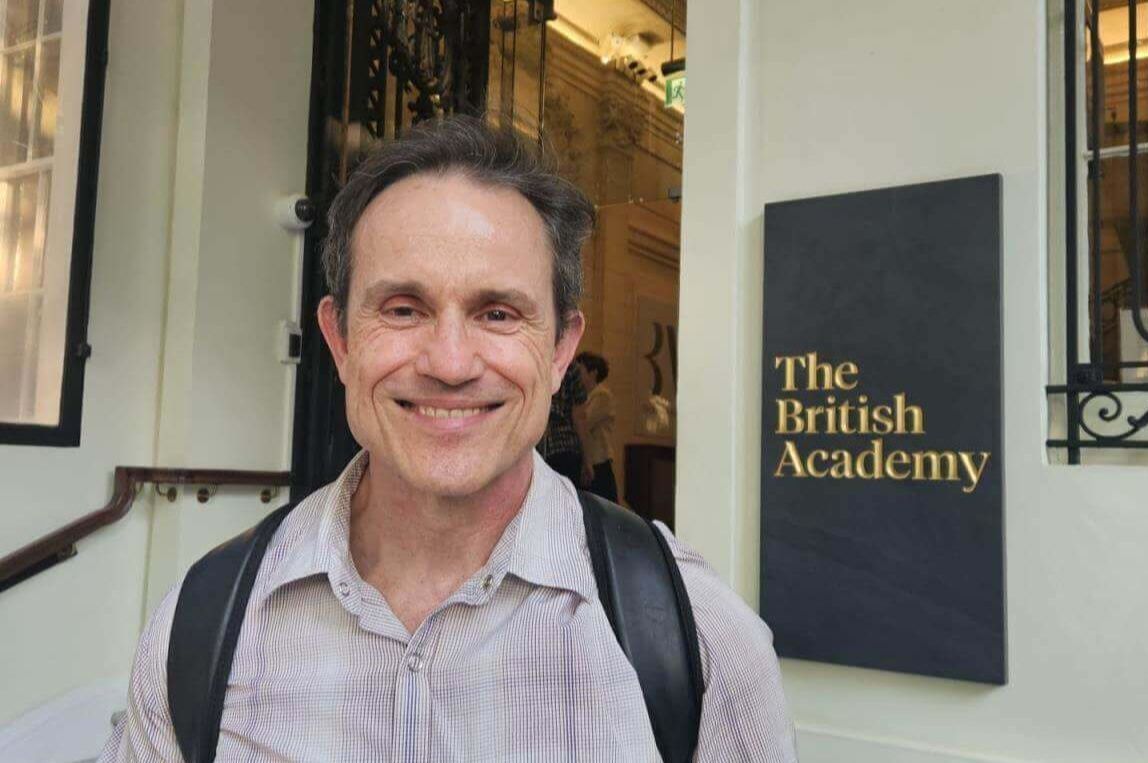
Professor Zoltán Dienes has been elected a Fellow of the British Academy in recognition of his influential research spanning scientific reform and consciousness science.
Professor Dienes has spent more than three decades exploring how scientific research can become more rigorous, transparent and accessible. |
|
|
His research focuses on the distinction between conscious and unconscious mental states, exploring implicit learning, where learning takes place without conscious awareness, and phenomenological control, the ability to create convincing experiences that may misrepresent reality in order to fulfil a goal. This work is helping researchers understand how subjective experiences are created and how conscious and unconscious knowledge can be distinguished.
He said: “My work was formed in the crucible of the intellectual environment and support of Sussex… To say Sussex provided a job is to miss the point; it provided a community of like-minded people. That is why I am a Fellow of the British Academy.” |
|
|
Comment: What women’s journeys into farming teach us about transforming food systems |
|
|
By Dr Rachael Durrant
As The Land That Holds Us screens at Green Gathering from 30 July to 2 August, it arrives amid growing interest in who is entering farming and why. Beyond the dream of returning to the land, however, lies the difficult question of whether these aspirations can become secure livelihoods. |
|
|
Through my Women Back to the Land research project, I have spent several years following women from non-farming backgrounds who have chosen to build lives in agroecology, market gardening and other land-based work. Many were drawn to farming by a desire for meaningful work, connection to nature, care for the environment and more grounded ways of living.
Women without farming family backgrounds frequently lack access to affordable land, housing, capital and inherited knowledge. Many start with unpaid internships or poorly paid seasonal work.
Even within agroecology, women often face precarious employment, receive less recognition than men and are expected to take on invisible administrative and caring labour. This exposes a striking gap between the idealised vision of “getting back to the land” and the realities many experience.
If we want more people to enter sustainable farming, we must move beyond celebrating individual resilience. Better access to land, affordable rural housing, fair pay, secure training routes and stronger support networks are essential.
We also need to broaden our understanding of a sustainable relationship with the land. The focus is often on securing a farm and establishing an independent business within a traditional family farming model, but this should not be the only pathway we value. Many women combine growing with community organising, education, therapeutic work, environmental activism or other employment. Their experiences point towards cooperative projects, hybrid livelihoods, urban growing initiatives and new forms of collective belonging to the land.
These women are not simply inspirational success stories. Their experiences invite us to imagine a future in which people can build meaningful relationships with land, food and community in new ways, without feeling they have failed because their journey takes a different path.
Dr Rachael Durrant is a Senior Research Fellow in the Science Policy Research Unit at the University of Sussex Business School. |
|
|