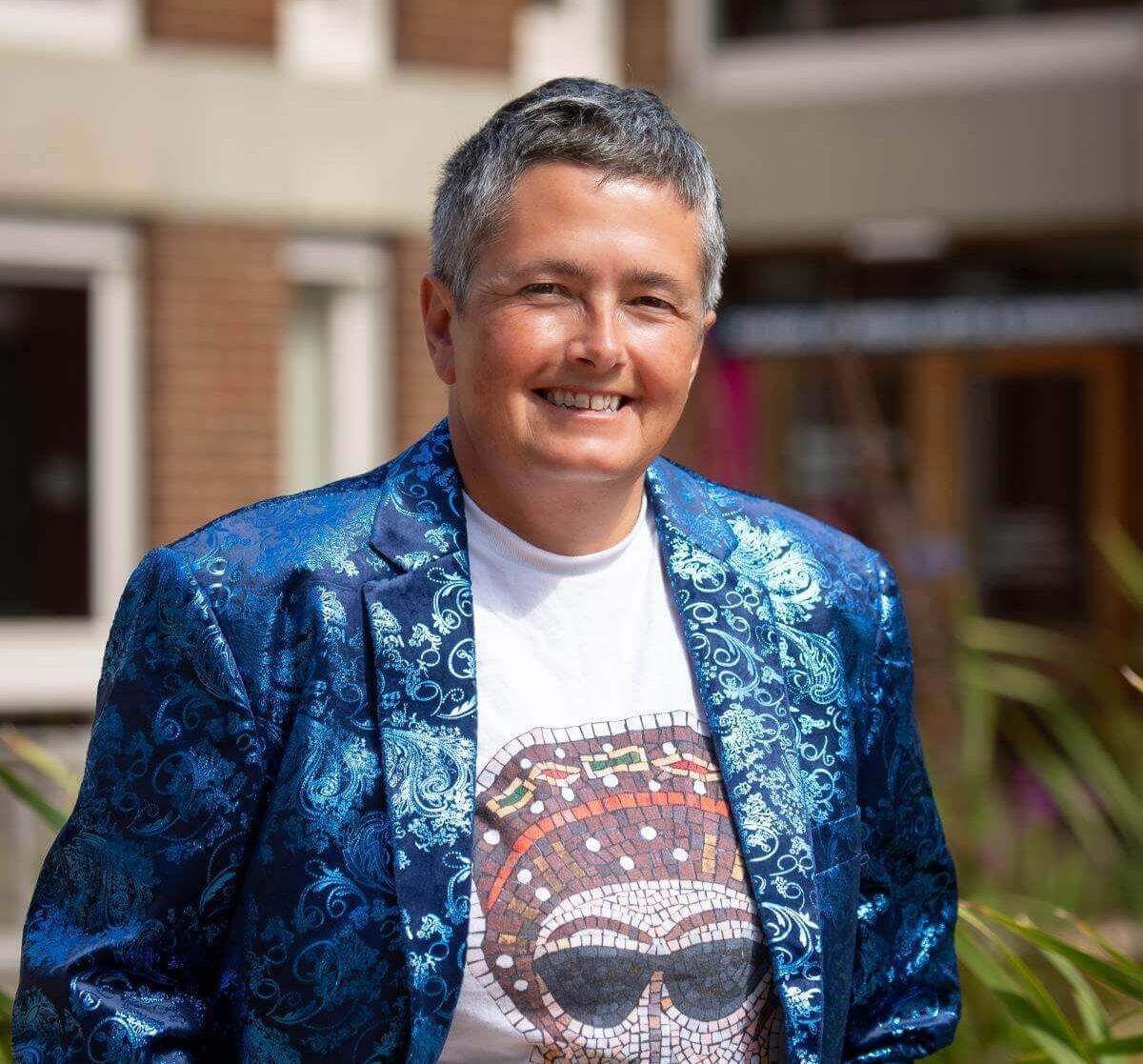
Professor Liz James has been awarded a €1.8 million European Research Council grant for Medieval Mosaics in Motion (MosaicsMove), a five-year project exploring what medieval wall mosaics can reveal about the art, culture and economy of the Mediterranean world.
Mosaics were among the most beautiful, costly and prestigious status symbols of the medieval Mediterranean, from the 4th to the 15th century. The project will focus on the small coloured glass cubes, known as tesserae, used to create them.
|
|
|
By studying the materials, artistic styles, techniques and historical records associated with surviving mosaics, the team will investigate where tesserae came from, how they travelled, and who was involved in making the mosaics.
The project will bring together archaeology, economic history, chemistry, art history, machine learning and data management. It will use this interdisciplinary approach to connect scattered evidence from mosaics across a wide chronological and geographical range, supporting expert analysis at a scale not previously possible.
Professor James said: “Mosaics are totally fascinating and this research could transform our understanding of them.”
The findings will offer new insights into production, trade networks, artistic practice, knowledge exchange, faith, patronage and consumption across the medieval Mediterranean.
Professor James will work with the Sussex Humanities Lab, alongside external collaborators in Paris and Delhi. |
|
|
How do the body and the brain communicate?
|
|
|
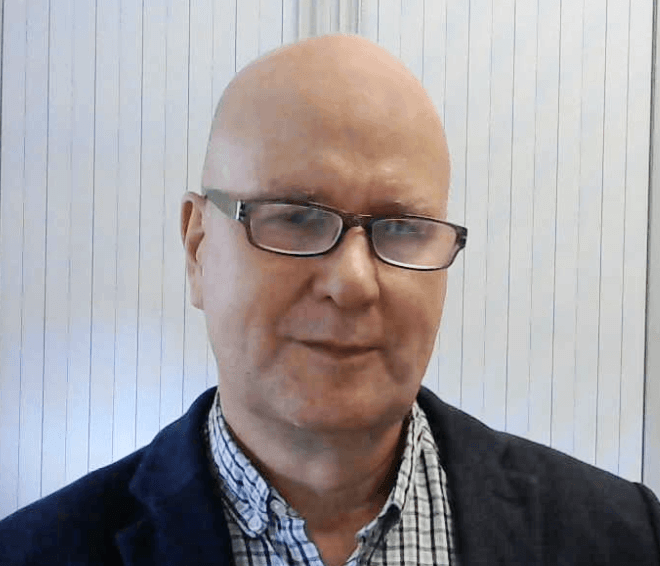
Professor Hugo Critchley has been awarded a €2.47 million European Research Council grant for a five-year project investigating how the brain interprets signals from the body, and how this shapes emotion, behaviour and mental health.
The project, Exploiting Quasi-Interoceptive Processes Underlying Affective Responses (EQUIPUAR), will explore interoception: the communication between the body and brain about our internal physical state. |
|
|
These signals help regulate basic bodily functions, prepare us for stress, and contribute to feelings such as anxiety, motivation and heightened emotion.
The project’s novel focus is “quasi-interoception”, a concept developed by Professor Critchley to describe bodily sensations that feel internal, such as a pounding heartbeat, changes in breathing or hearing a pulse in the ears, but may not directly reflect the body’s underlying physiological state.
His team will investigate how the brain interprets these mismatches, and how they may shape emotional responses and contribute to psychological symptoms. Using behavioural experiments, physiological monitoring and brain imaging, the project will examine how body–brain signals influence emotional learning, decision-making and social interaction.
Professor Critchley said: “This new knowledge will uncover mechanisms that we can target in novel treatments for psychological symptoms. I am thrilled to have received this award.” |
|
|
Sussex scholar helps uncover the lost code behind the world’s first chatbot |
|
|
More than half a century before ChatGPT, a simple computer program called ELIZA
astonished artificial intelligence researchers by appearing to hold a conversation, often prompting users with the phrase: “PLEASE GO ON”.
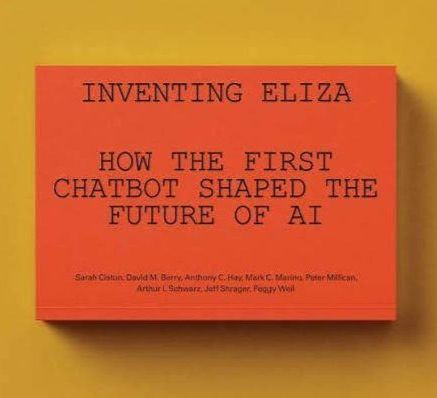
Now a new open access book, co-authored by Professor David M. Berry, Professor of Digital Humanities at the University of Sussex, reconstructs the story of the world’s first chatbot and its lasting influence on how society understands AI. |
|
|
Inventing ELIZA: How the First Chatbot Shaped the Future of AI, published by MIT Press on 14 July 2026, has been reviewed in Science, which describes the book as “a masterful contribution to the emerging discipline of software studies—a kind of literary studies for executable texts.”
The book is the result of more than four years of interdisciplinary research by Team ELIZA, involving Sussex, Oxford, Stanford, the University of Southern California and the Massachusetts Institute of Technology (MIT). Its work included the discovery of Joseph Weizenbaum’s original ELIZA source code in the MIT archives, where it had remained missing for 60 years.
ELIZA was written in MAD-SLIP, an early programming language used in the 1960s. The book includes annotated versions of the recovered source code, as well as the famous DOCTOR script, which made ELIZA respond like a therapist by turning users’ words back into questions. A supporting website also lets readers try ELIZA for themselves. |
|
|