Last week (22 June), Chair of the Business and Trade Select Committee, Liam Byrne MP, joined researchers and business leaders to discuss the state of the UK’s trading fortunes.
Marking the tenth anniversary of the Brexit vote, speakers at the University of Sussex’s UK Trade Policy Observatory (UKTPO) event examined the future of UK-EU cooperation and how best to support economic prosperity in an increasingly fragmented global landscape. |
|
|
Announcing a new Select Committee report taking stock of EU relations, Liam Byrne MP warned that the economic damage done by Brexit will not be reversed by the government’s current reset plans, which are only projected to deliver a 0.5% lift to GDP by 2040.
Liam Byrne MP said: “The thing that strikes me hardest today is the gap between political rhetoric and economic reality. Ministers have dialed up their words against Brexit, but the solutions being presented will give us less than a 1% uplift in GDP. So that’s a 1% solution to what is optimistically a 4% loss from Brexit. That has led to all sorts of political consequences, one of which is the rise of populism and has left us going through Prime Ministers faster than Italy. This is a national strategy moment, and we need a much bolder vision based on the world we’re in, that includes better cooperation with Europe.”
Although they agreed that Brexit has damaged trade and hamstrung policymakers, members of the UKTPO and business representatives fell short of advocating an immediate move to rejoin the EU. Instead, they discussed the stable conditions needed to support business confidence in the years ahead. |
|
|
Microplastics found in over 75% of pet food, Sussex study finds |
|
|
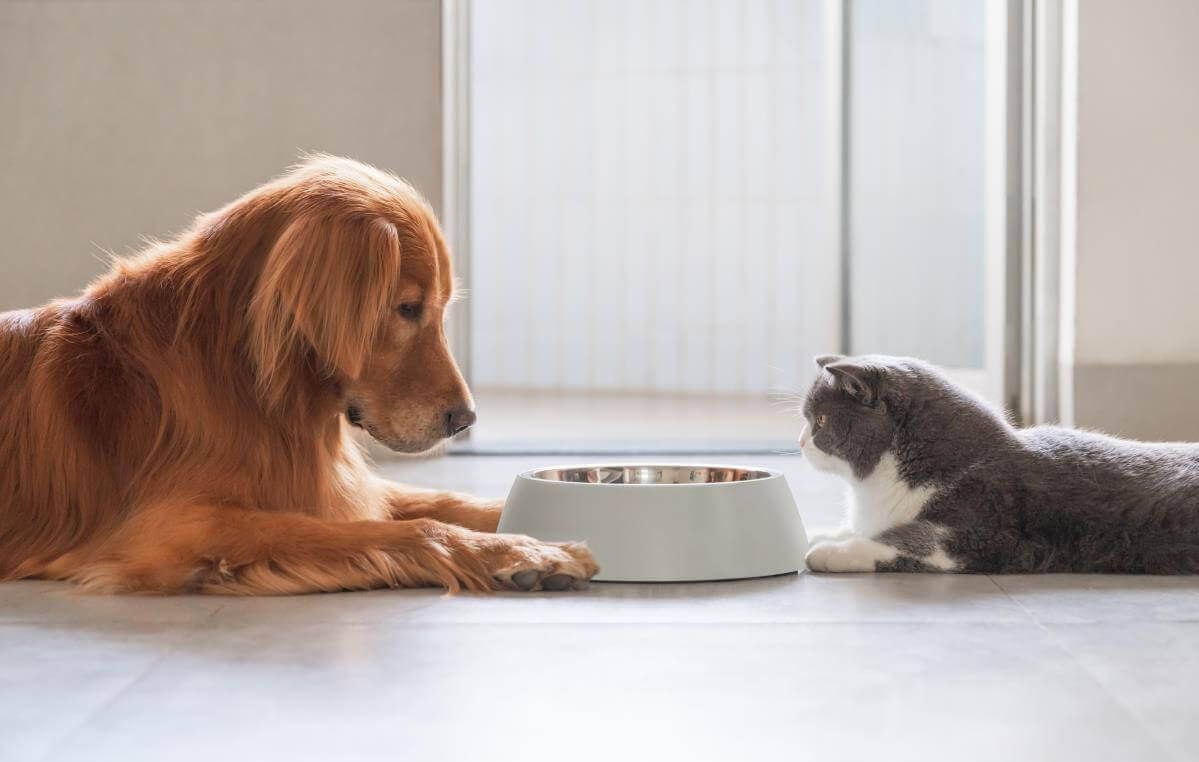
Is plastic hiding in your pet’s food?
A new study by researchers from the University of Sussex and the University of Exeter has found microplastics in over three quarters of pet food products tested, revealing a hidden source of plastic pollution that could affect pets, wildlife and the wider environment. |
|
|
The research, supported by the British Hedgehog Preservation Society and published in Environmental Toxicology and Chemistry, analysed 38 dog, cat and hedgehog food products sold in the UK. Microplastics were detected in 84% of brands and 27% of all samples tested, with cheaper “value range” products containing more than more expensive products.
Sussex PhD student and lead researcher Emily Thrift said: “We found microplastics in 16 out of the 19 brands we tested, including very well-known ones. Given the huge number of pets in the UK, as well as hedgehogs and other wild mammals which are fed these foods, this represents a major, previously overlooked pathway for plastic to enter terrestrial ecosystems.”
The study estimates that a large dog could ingest between 162 and 2,314 microplastic particles per day, while hedgehogs could consume between 6 and 105.
Professor Fiona Mathews, Professor of Environmental Biology at Sussex, said the findings show that microplastics are “not just a marine problem”, with pet food and faeces potentially spreading plastic pollution through soil and ecosystems.
Read more about the study on the University of Sussex website |
|
|
Comment: Why publicly funded research should be free to access |
|
|
by the Open Press University of Sussex team
At a time when higher education faces mounting challenges, the traditional publishing model for research feels out of step.
Universities fund research, academics write and peer-review articles, and then institutions pay publishers of academic books and journals again through subscriptions or paywall charges to access the results. |
|
|
This means that some of the world's largest academic publishers continue to generate substantial profits from a system sustained by publicly funded research and largely unpaid academic labour.
Open Press University of Sussex (OPUS) is part of a growing international movement that is challenging the dominance of commercial academic publishing and making research freely available to everyone.
As a Diamond Open Access publisher, OPUS does not charge readers or authors. Funded through the University Library, it reflects Sussex's commitment to openness and public engagement.
Since its launch in 2022, OPUS has published twelve books and hosts four journals, covering topics as diverse as sustainability, migration, decolonisation, pedagogy and biological psychology, with many more titles in development.
The case for university-based publishing is compelling. Paywalls restrict access not only for researchers and students at less well-resourced institutions, particularly in the Global South, but also for policymakers, practitioners and members of the public who could benefit from new knowledge.
Open Access ensures that research can reach the widest possible audience. Evidence also suggests that openly available publications attract more readers and citations than work locked behind subscription barriers.
University presses such as OPUS are also creating space for innovation. Digital-first, library-based publishing allows experimentation with new formats, community-owned infrastructure and more inclusive approaches to peer review and knowledge creation.
If universities exist to create and share knowledge, it makes sense that they should play a greater role in publishing it too. Initiatives such as OPUS demonstrate that scholarly publishing can be ethical, accessible and focused on public benefit rather than private profit.
If you’d like to know more, please get in touch at openpress@sussex.ac.uk |
|
|