What do we talk about when we talk about magic?
|
|
|
This email is being sent to all University of Sussex staff. |
|
|
|
|
|
|
|
Sussex scientist part of £1m dementia innovation prize win |
|
|
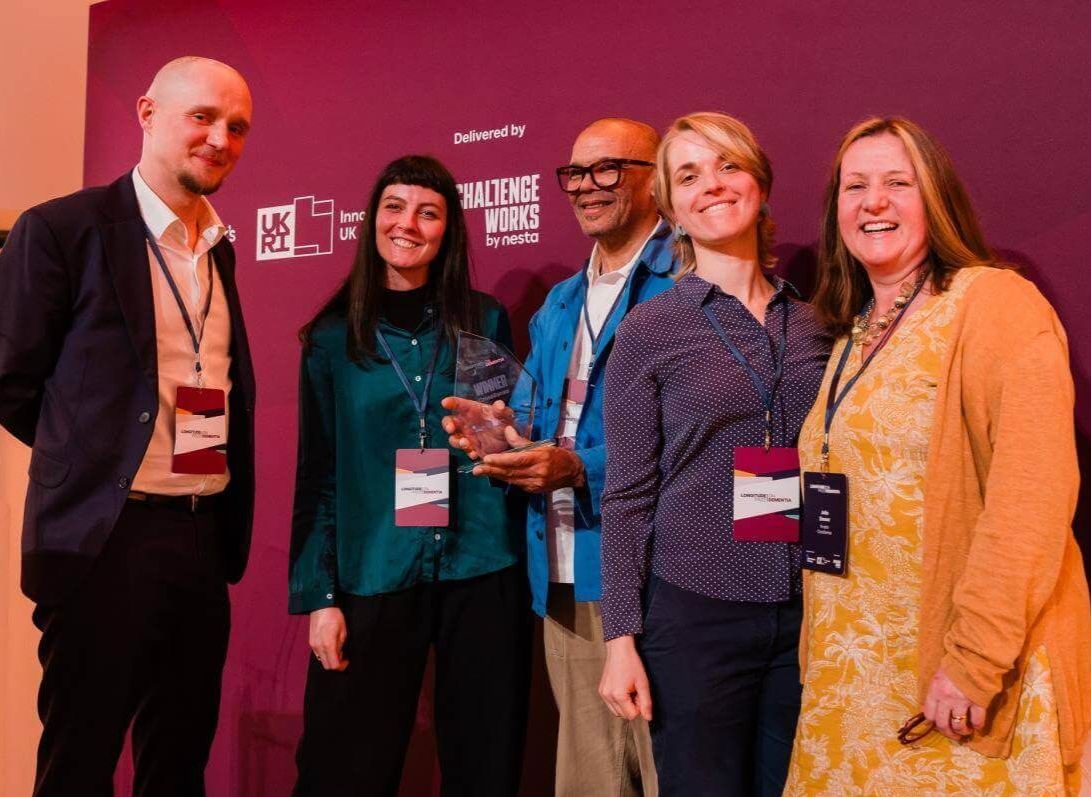 |
Professor Julia Simner, right, with the Animorph team |
|
Neuropsychologist Professor Julia Simner is part of the team behind CrossSense, the winner of the £1 million Longitude Prize on Dementia.
The breakthrough technology uses augmented reality smart glasses and a gentle AI assistant called Wispy to help people with early-stage dementia carry out everyday tasks and live safely and independently at home for longer. |
|
|
Professor Simner was Lead Scientist on the project, helping to ensure the technology was grounded in psychological science and shaped around the real needs of people living with dementia. Drawing on her expertise in neuropsychology and multisensory cognition, she helped design the product and oversaw testing in real homes with people affected by dementia.
The result is an assistive tool that can identify objects, guide routines, highlight hazards, and adapt to each user as their needs change. Testing also showed improvements for some users in naming objects, visual-spatial understanding, and memory.
Reflecting on her contribution to CrossSense, Professor Julia Simner said: “My focus was on integrating psychological science into the heart of the technology and ensuring it was robustly tested with real people in real homes. Technology works best when it’s guided by the people it’s meant to support.” |
|
|
Sussex professor explains how the world changed through plant trade |
|
|
A Sussex historian is among those who have contributed to a major exhibition about how plants and flowers have shaped our world.
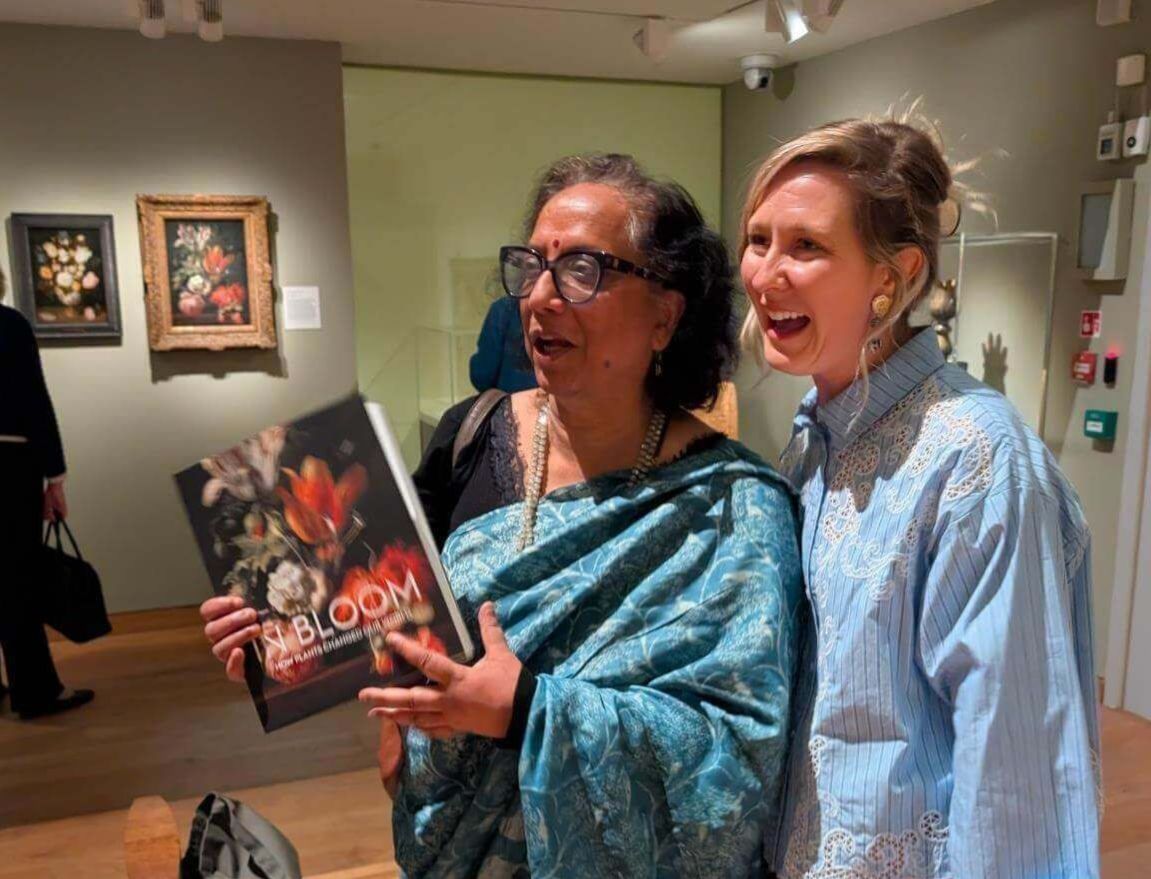
Professor Vinita Damodaran, Director of the Centre for World Environmental History and Professor of South Asian History, authored an essay on ‘Botany and Empire’ for the exhibition catalogue accompanying In Bloom, which is at the Ashmolean Museum in Oxford until 19 August 2026.
|
|
|
She also features in the exhibition’s audio tour, in which she describes how the trade in plants from the seventeenth century under the British East India Company transformed environments in India through plantation crops such as rubber and tea, and in Britain through the import of exotic plants such as rhododendrons and orchids.
Professor Damodaran said: “It was wonderful to be involved in this major exhibition. My essay aims to emphasise the importance of creating an inventory to understand different periods and practices of colonial collecting, and to highlight efforts for cultural remediation.”
Featuring more than 100 artworks, including botanical paintings and drawings, and historical curiosities, the exhibition traces the passion of early plant explorers and the networks that shaped science, global trade and consumption. |
|
|
Sussex academic recognised for decades of work on neglected tropical disease |
|
|
|
|
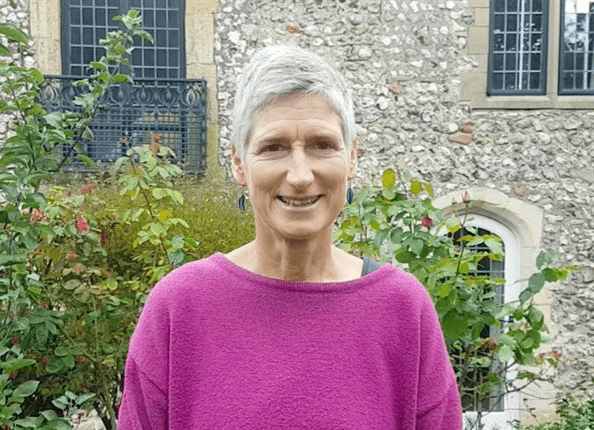
Her research focuses on understanding the distribution of this neglected skin condition and developing approaches to eliminate it within our lifetimes.
Professor Davey has spent decades raising the profile of the condition, which affects an estimated four million people in Africa alone. The award recognises her sustained work in this area, her commitment to inclusion, and ongoing leadership in this field.
Reacting to the news of the award, Professor Davey said: “I’m excited to receive this recognition from NIHR. It will facilitate the establishment of the World Health Organization (WHO) Resilient and Sustainable Health Systems Approach for Podoconiosis Elimination (RESHAPE) Platform, an important translational step that builds on two decades of research into this highly neglected condition.”
|
|
|
What do we talk about when we talk about magic? |
|
|
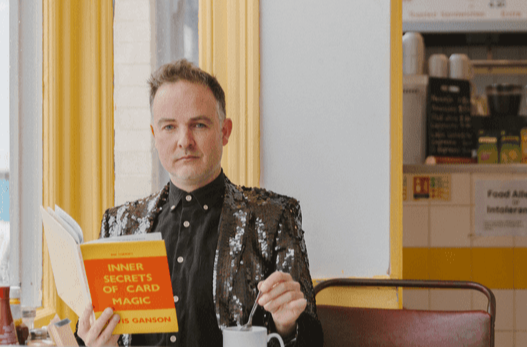
By Augusto Corrieri
As a teenager, I was obsessed with performing card tricks – the classic sleight‑of‑hand routines where everyone knows an explanation exists, yet delights in not quite grasping it. Magic, in this sense, has always been a shared agreement to momentarily suspend certainty. |
|
|
Later, when I became an academic, I traded decks of cards for performance theory, focusing on experimental art and how this reconfigures conventional understandings of theatre and perception. But gradually another form of ‘magic’ has been drawing me in: the kind rooted in folklore, spirituality, and ecological traditions. Consider the word Easter, thought to derive from Eostre, a Pagan goddess of fertility whose rituals marked the arrival of spring and new life.
For the past two years, I’ve been seeking ways of bringing these two magics – the sleight-of-hand and the ‘spiritual’ – into dialogue through performance. It’s not, historically speaking, an unusual pairing. Shamans regularly employed tricks not as deceit but as tools for creating communal meaning. A floating handkerchief, for instance, didn’t simply astonish; it signalled contact with ancestors or natural forces. Illusion helped open a door to the unknown.
My event, What we talk about when we talk about magic, is part of Sussex’s Festival of Ideas series, led by the Faculty of Media, Arts and Humanities, and presented as part of Brighton Festival. Taking place at the Attenborough Centre on 15 May 2026, it brings these threads together in a performance in progress: familiar card tricks performed through texts that border on incantation – not supernatural, but gesturing towards that other magic. I’m not conjuring spirits, yet something happens in the overlap. Illusion becomes a way of reconnecting with those other unknowns.
This, I believe, is the energy behind much academic inquiry, and not just in the arts and humanities. I often think the best scientists are aligned with magic. We regard science as rational and certain, but at its heart lies a fascination with everything we cannot explain. Quantum physics, with its paradoxes and disappearing certainties, is as mysterious as any séance.
Dr Augusto Corrieri is an Associate Professor in Theatre at the University of Sussex. He performs under his stage name, Vincent Gambini. |
|
|
|
|
Professor Julia Simner (featured above) discussed award-winning AI smart glasses designed to support people with dementia on BBC One’s The One Show, with further coverage in The Guardian, The Telegraph, BBC World Service, and other outlets.
Reuters featured new research from Dr Steven Rolf and Dr Julian Germann on how the US-China trade war is affecting German companies, with further coverage in Spiegel, China Times, U.S. News & World Report, NTV, The Business Standard, and other outlets.
Dr Jenny Bosten commented in Scientific American on a new optical illusion that reveals how the brain interprets colour in relation to its background.
Professor Ron Chrisley featured in New Scientist discussing the study of consciousness, with insight into how the brain accepts facts from lived experience.
|
|
|
|
We hope you have enjoyed this edition of Research at Sussex. We would love for you to share it with your friends, colleagues, and collaborators – they can subscribe here.
|
|
|
|
|
|