Could trees have legal rights in the UK?
|
|
|
This email is being sent to all University of Sussex staff.
|
|
|
|
|
|
|
Sussex launches pioneering toolkit to protect the
rights of trees and forests |
|
|
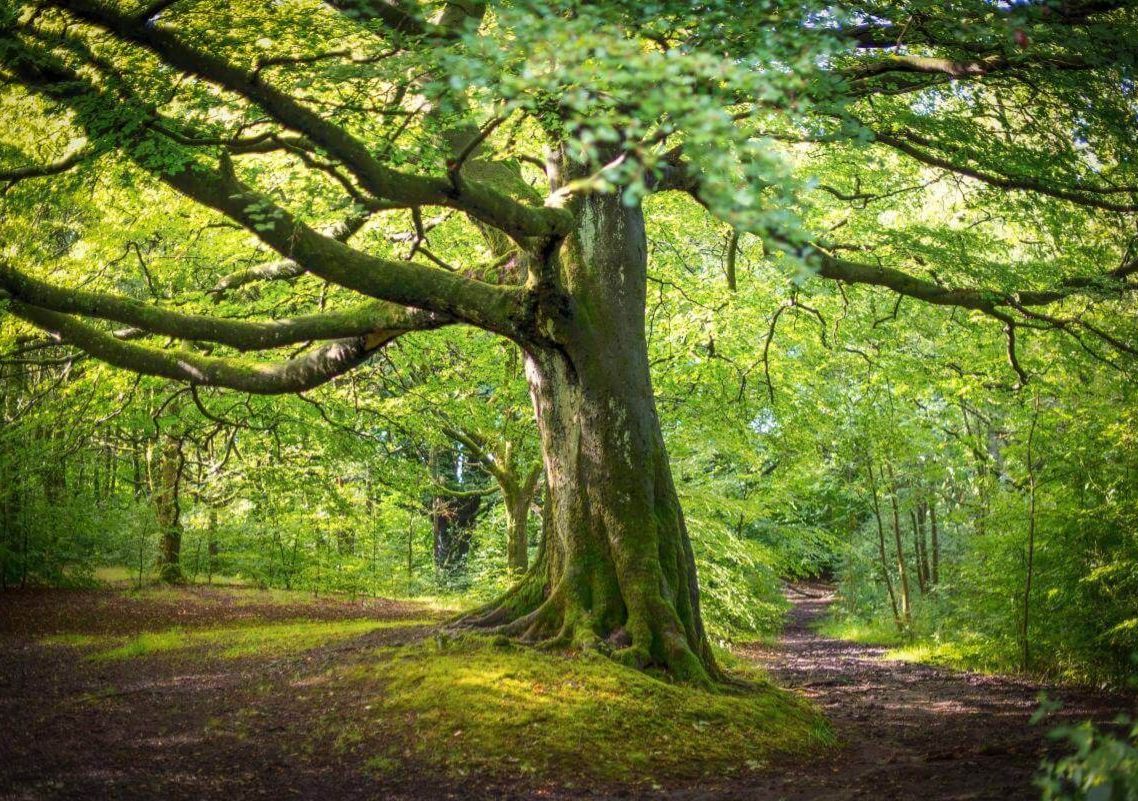
A first-of-its-kind legal toolkit aimed at winning legal rights for trees, woodlands and forests in the UK has been launched by experts from the University of Sussex.
The Rights of Trees, Woodlands and Forests toolkit is available online and seeks to advance the way we recognise and respect the inherent value of trees and woodlands in the UK. |
|
|
The Rights of Nature movement recognises ecosystems - such as rivers, forests, and mountains - not as human property or resources, but as legal subjects with inherent rights to exist, thrive, and regenerate.
Associate Professor Joanna Smallwood, lead of the Environmental Justice Law Clinic at Sussex and a Rights of Nature lawyer, who created the toolkit, said: “We believe changing our legal systems to better protect nature requires shifting attitudes, changing the way we speak about other parts of nature, and giving a voice to nature in decision making.
“We are part of nature, not above nature and other parts of nature are living beings with inherent rights that should be better respected in decisions impacting them.”
Principles from the toolkit have already been used to protect trees such as the 1066 Yew Tree in St George’s Churchyard, Crowhurst, Sussex, thought to be more than 1,300 years old, pre-dating the Battle of Hastings and the arrival of William the Conqueror.
In September 2025, Associate Professor Smallwood supported residents who persuaded Rother District Council to agree a motion supporting ‘personhood’ for the 1066 Yew and other heritage trees.
|
|
|
|
Sussex researchers link our eyes to a one-eyed ‘cyclops’ ancestor |
|
|
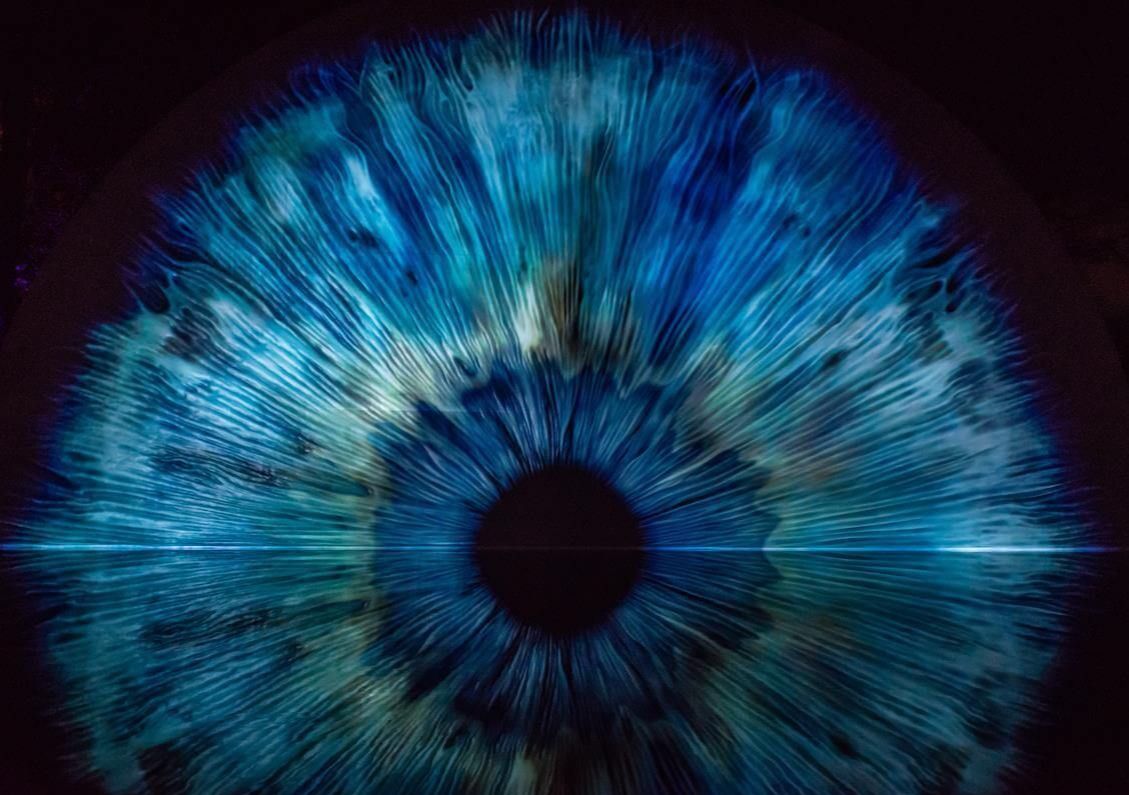
The origins of the human eye have long been a mystery, a puzzle that even Charles Darwin wrestled with as he developed his evolutionary theory.
A new study by researchers at the University of Sussex and Lund University, published in Current Biology, suggests vertebrate eyes may trace back to a cyclops-like ancestor with a single eye on top of its head. |
|
|
The research team proposes that this “occipital eye” existed around 600 million years ago, long before fish, when complex animal life had only just begun. They say traces of this ancient eye survive today as the pineal gland in the brain.
Drawing on evidence spanning decades and combining data from across visual-system structure, function, and evolution, the team proposes a series of steps that led to the vertebrate eye. They suggest the early animal once had paired eyes, but as it adopted a partially burrowed, stationary lifestyle filtering plankton from seawater, its visual system shifted towards a single median (cranial) eye. Much later, its descendants returned to a free-swimming life and paired vision re-emerged, with new image-forming eyes evolving from parts of this earlier cranial eye – a detour that may help explain why vertebrate eyes develop from the brain, unlike those of insects and squids, which originate in the skin.
Professor Tom Baden, Co-Director of Sussex Neuroscience at the University of Sussex, who co-led the study with Dr George Kafetzis, said: “We now also understand the origin of the nerve circuits that analyse images in the retina. This helps us understand not just how our eyes work, but more fundamentally, what they are.” He added: “These animals therefore retain a true ‘living fossil’ of the eye at the top of the head.”
|
|
|
NASA visit inspires potential new areas for space science research |
|
|
Sussex’s Professor Seb Oliver was invited to visit NASA's Johnson Space Center in Houston in February as part of a UK Space Agency delegation.
Professor Oliver is one of the Co-Investigators of the PRobe far‑Infrared Mission for Astrophysics (PRIMA), and is leading the UK contribution to the mission through a consortium of researchers at universities, government laboratories and small businesses. |
|
|
PRIMA – one of just two mission concepts shortlisted by NASA for a potential $1 billion probe mission launching in 2032 – aims to uncover the origins of galaxies and the solar system through far‑infrared observations using a cryogenically cooled 1.8‑metre telescope. A final decision on which mission will be accepted is due to be made this year (2026).
During visits to NASA’s Johnson Space Center, Jet Propulsion Laboratory, and Ames Research Center, Professor Oliver met with PRIMA collaborators in the US as well as other UK space scientists.
He described the trip as inspiring, opening new possibilities for Sussex-led research in space – from quantum technologies to planetary science and AI‑driven exploration.
He added: “It also opened my eyes to the possibilities for humanities and broader social sciences, considering questions such as the ethics and legal implications raised by the accelerating pace of space activity.” |
|
|
|
|
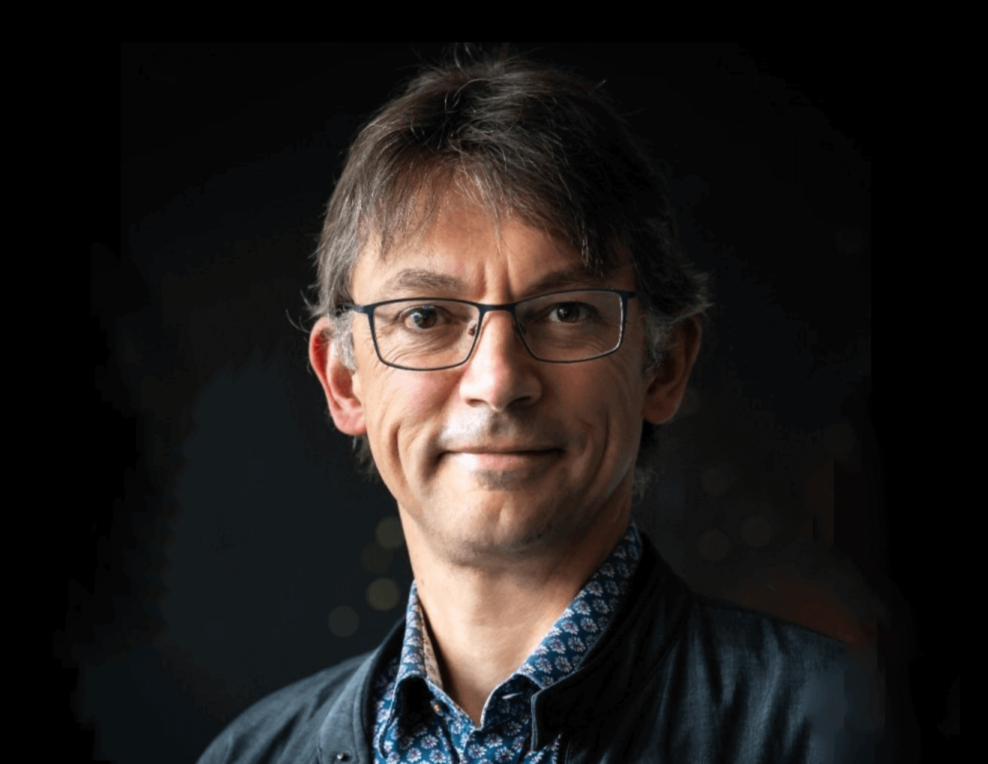
Professor Tom Baden and Dr George Kafetzis (as featured above) received international coverage for their new study on the evolutionary origins of vertebrate eyes and a “cyclops” ancestor, with Dr Kafetzis discussing the findings on BBC World Service and coverage in The New York Times and Times of India.
The Guardian featured research by Professor Gillian Sandstrom on talking to strangers, offering advice on small, low-risk conversation starters to help break down barriers between people.
Professor Julia Simner appeared on BBC Radio 4’s The Life Scientific to discuss misophonia, ASMR, and other sensory traits, sharing how her research has identified links with autism, personality types, and previously unrecognised sensory differences.
In the Financial Times, Dr Paul Dorfman explored concerns over rapid coastal erosion at the proposed Sizewell C site, noting climate modelling suggests the area could face regular flooding by the 2030s.
Professor Dave Goulson talked to Times Radio, explaining how bees communicate the location of nectar sources, using the 'waggle dance' to signal distance and direction. |
|
|
|
We hope you have enjoyed this edition of Research at Sussex. We would love for you to share it with your friends, colleagues, and collaborators – they can subscribe here.
|
|
|
|
|
|