Which Words of the Year will actually stick?
|
|
|
This email is being sent to all University of Sussex staff.
|
|
|
|
|
|
|
World’s most precise LiquidO radiation detector built at Sussex |
|
|
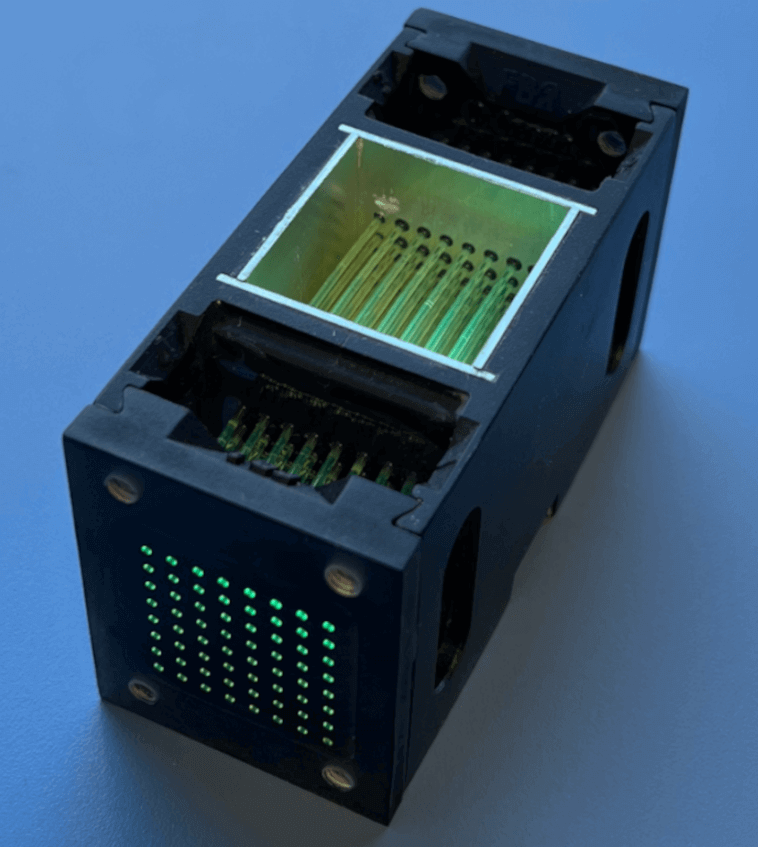
A new detector built by Professor Jeff Hartnell and members of the Experimental Particle Physics Research Group at the University of Sussex could make radiation monitoring cheaper and far more precise. Early use of the detector is planned to monitor a commercial nuclear reactor in France through the AntiMatter-OTech innovation project.
The team’s LiquidO device, developed over six years, tracks cosmic-ray particles (high-energy particles from space) to better than half a millimetre, making it the most precise detector of its type so far, as reported in the team’s paper in the Journal of Instrumentation. |
|
|
This level of detail helps scientists to pinpoint exactly where radiation interacts, trace a particle’s path, and distinguish between different particles based on their behavior in the detector.
LiquidO is a new kind of radiation detector that works like a camera for subatomic particles (the tiny building blocks of atoms). It uses an opaque scintillator – a material that produces a flash of light when radiation passes through it. Because the material is deliberately cloudy, the light stays close to where it was produced, while a grid of thin optical fibres collects it to map the particle’s path.
Dr Nicolo Tuccori, Research Fellow (Physics and Astronomy) said: “LiquidO could deliver detectors that are 5–10 times more precise for a similar cost – opening up wider uses in radiation monitoring and nuclear safeguards, with longer-term possibilities in medical imaging.” |
|
|
Mental health chatbots work best when users feel
emotionally close to the AI |
|
|
New University of Sussex research suggests mental health chatbots are most effective when users develop an emotional connection with the AI.
With more than one in three UK residents using AI for mental health support, the study, titled User-AI intimacy in digital health, also underlines the need for responsible design. |
|
|
Analysing feedback from 4,000 users of Wysa – Everyday Mental Health App, researchers found people reported positive changes in wellbeing when they felt emotionally close to the chatbot, often describing it as a friend, companion or therapist.
Assistant Professor Dr Runyu Shi said: “Forming an emotional bond with an AI sparks the healing process of self-disclosure. Extraordinary numbers of people say this works for them, but we need to look at how AI can be used appropriately and when cases need to be escalated. The app we studied, Wysa, has been specially designed for mental health, but many people are using standard AI and we need to make sure people don’t get stuck in a self-fulfilling loop, with dangerous perceptions going unchallenged.”
The team says the findings reinforce the need for safeguards so people are guided towards appropriate clinical support when needed, particularly in moments of distress. |
|
|
Sussex joins landmark Civic University Agreement to drive positive change in the region |
|
|
|
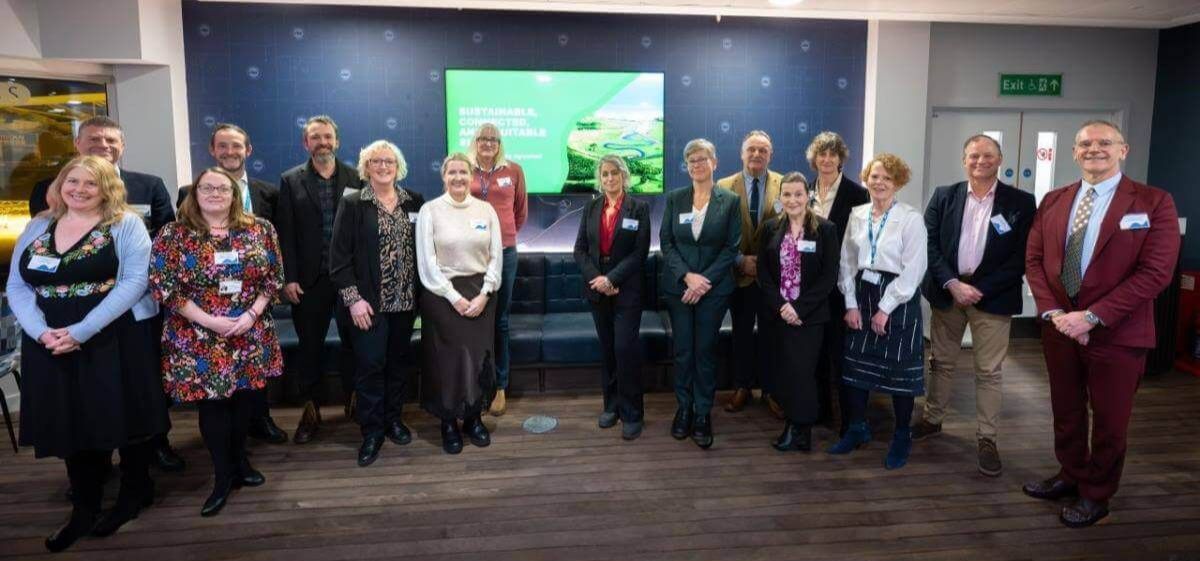
Prominent local organisations from across Sussex came together on Tuesday, 13 January, to launch a powerful commitment to boost regional economic growth and tackle local social and environmental challenges.
Universities of Sussex, Brighton and Chichester signed a Civic University Agreement (CUA) with local authorities, public services, business networks, and community partners from across Sussex – including Brighton & Hove City Council, Gatwick Diamond Business, East and West Sussex County Councils, Brighton and Hove Albion FC, the FE Sussex consortium of further education colleges, Sussex Police, and NHS Sussex.
Working together in this way means expertise and research strengths from across the University will help to tackle social inequalities, pioneer new technologies and drive economic growth across the region.
Professor Sasha Roseneil, Vice-Chancellor and President of the University of Sussex, said:
“We are facing significant social and economic challenges that mean it is more important than ever for institutions and organisations to work together and pull in the same direction. This initiative brings universities together with partners across the whole of Sussex with a shared civic ambition to unlock the strengths of people and communities in this region.”
The agreement will support activity rooted in community needs, such as the joined-up work to take forward the Sussex Energy mission. The mission aims to increase the production of zero-carbon energy in the region while reducing the demand for energy, so that Sussex achieves energy neutrality by 2040.
|
|
|
|
|
Comment: Zee and fiddly slop? How English is changing one Word of the Year at a time |
|
|
|
By Professor Lynne Murphy
It’s Word of the Year (WotY) season, and as a long-time WotY watcher, I’m reminded how much these annual choices reveal about the ever-shifting English language.
Various language organisations select their own WotYs – mostly commercial dictionaries, though the American Dialect Society, which started the tradition for English, still chooses its winners by vote each January. Some pick new coinages; others choose words that capture a wider cultural moment. |
|
|
Since 2006, I’ve chosen Transatlantic Words of the Year on my Separated by a Common Language blog – highlighting UK terms gaining ground in the US and vice versa. This year’s UK-to-US pick is fiddly, a once‑distinctively British word that is now so common in American English that many don’t realise its origins. The US‑to‑UK word is zee, specifically in Gen Z. While British speakers still say zed for the alphabet letter, the generation name has crossed the Atlantic with its American sound intact – at least among younger Britons.
Claims that British English is being overwhelmed by “Americanisms” remain a reliable media trope. This autumn, a teacher survey commissioned by The Times sparked headlines suggesting British children increasingly favour American words. But the evidence is thin. Teachers were asked what they noticed, and humans notice the unusual – like candy at Halloween – not the everyday sweets said thousands of times more. A few anecdotes don’t make a linguistic revolution. Children routinely cycle through words they later abandon, such as doggy (for dog) and nee‑naw (for emergency vehicles).
Not every newcomer survives. The words most likely to stick around are those that fill real needs – terms like Gen Z or slop (low-quality AI content), which surfaced as WotYs across multiple English-speaking sources this year. Informal and interactional vocabulary – cheerio, brilliant, epic, sick – rises and falls with each generation.
Because language change is unpredictable, authoritative dictionaries generally remain cautious, waiting to see which words endure. English has always evolved gradually, unevenly, and far less dramatically than clickbait would have us believe.
Lynne Murphy is Professor of Linguistics at the University of Sussex and the author of The Prodigal Tongue: The love-hate relationship between American and British English (2018). She is also editor of Dictionaries: The Journal of the Dictionary of North America.
|
|
|
|
Professor Thomas Nowotny appeared on ITV Meridian, highlighting Sussex AI work that is helping people to learn sign language more effectively and improve access for people who are deaf.
BBC Radio 4 Today Programme featured Professor Anil Seth on a special guest-edited episode discussing whether AI could ever be conscious.
Dr Giulia Poerio discussed the benefits of letting the mind wander in The Washington Post, noting that research has found daydreaming can help people crack complex problems without consciously working on them.
In CNBC’s roundup of Bitcoin forecasts for 2026, Professor Carol Alexander predicted the cryptocurrency will trade in a high-volatility range of $75,000–$150,000, with a “centre of gravity” around $110,000 as institutional investment grows.
|
|
|
|
We hope you have enjoyed this edition of Research at Sussex. We would love for you to share it with your friends, colleagues, and collaborators – so please feel free to forward it on.
Help us shape future editions. We would really value your feedback and ideas for content that you would like to see. Please send your thoughts to Campaigns@sussex.ac.uk. |
|
|
|
|
|